Millets are a group of small-seeded cereal grains that have been cultivated for thousands of years across Asia and Africa. Long before crops such as rice and wheat became dominant, millets were an important staple food in many regions because they were easy to grow and highly nutritious. Today, these ancient grains are experiencing renewed global interest as people look for healthier and more sustainable food options.
Millets are valued for their adaptability and resilience. They can grow in dry climates and poor soil conditions where many other crops struggle. Because of these characteristics, millets are increasingly recognized as an important crop for sustainable agriculture and food security.
Types of Millets
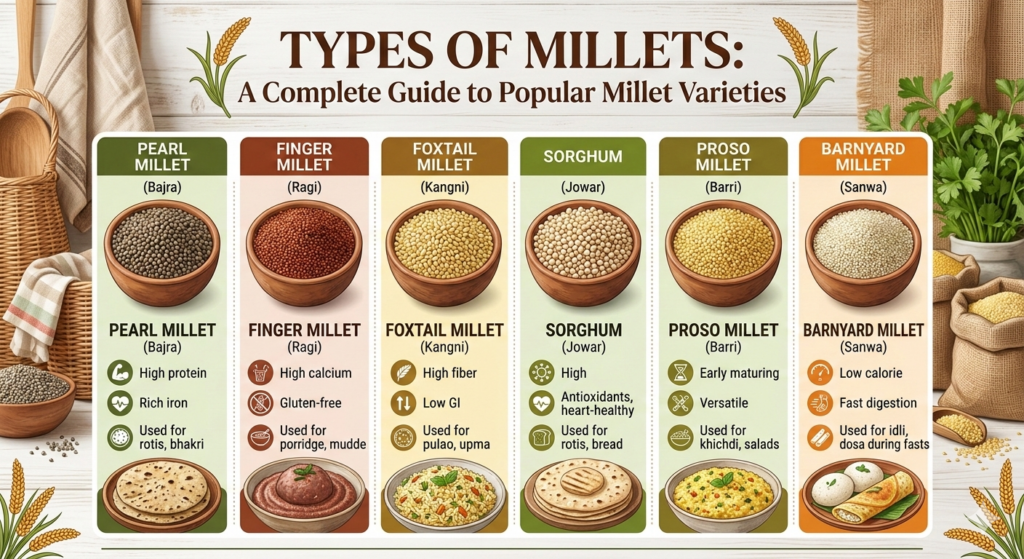
The term “millets” refers to several different grains rather than a single crop. Each variety has its own nutritional profile, taste, and culinary use. Some of the most widely grown and consumed varieties include Pearl Millet, Finger Millet, Foxtail Millet, and Sorghum.
These grains are used in many traditional and modern dishes, including porridges, flatbreads, salads, snacks, and baked products. Their versatility makes them suitable for a wide range of cuisines and dietary preferences.
Historical Importance of Millets
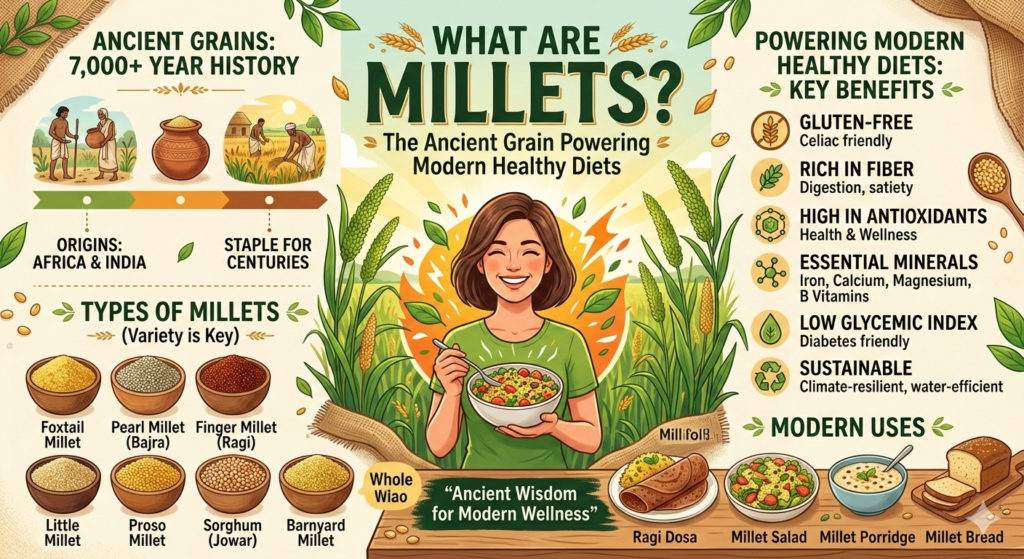
Millets have a long history in agriculture and human diets. Archaeological findings suggest that these grains were cultivated thousands of years ago in regions such as India, China, and Africa. In many traditional farming communities, millets were a reliable staple because they could grow with minimal water and survive harsh weather conditions.
In India, for example, millet-based foods have long been part of regional cuisines, particularly in dry and semi-arid areas where other grains were difficult to cultivate.
Nutritional Value of Millets
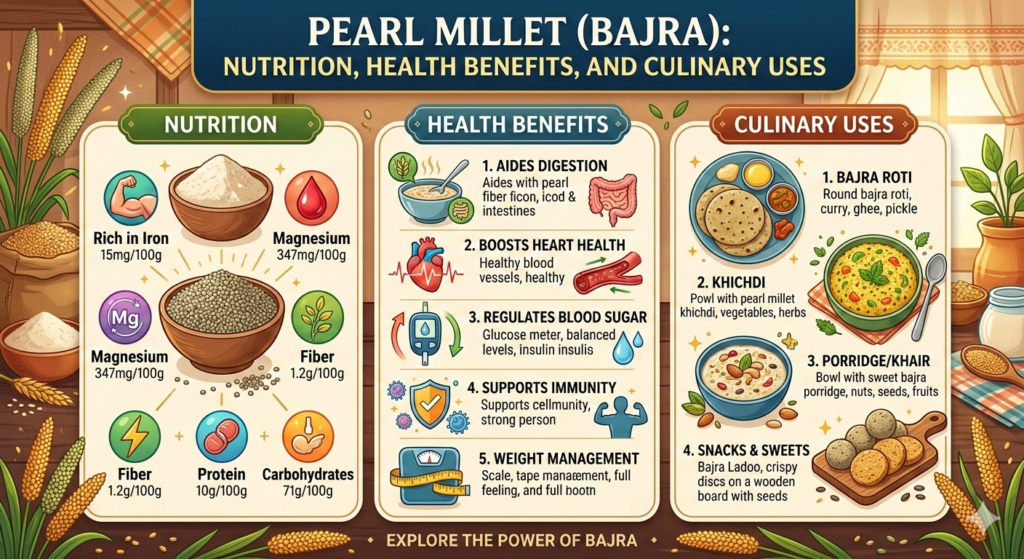
One of the key reasons millets are gaining attention today is their strong nutritional profile. Millets are rich in dietary fiber, plant-based protein, vitamins, and essential minerals such as iron, calcium, and magnesium. They are also naturally gluten-free, making them suitable for people who avoid gluten in their diets.
Their nutrient density and slow digestion rate can help support balanced diets and sustained energy levels.
Global Revival of Millets
Interest in millets has grown worldwide due to increasing awareness of sustainable food systems and healthy eating habits. Governments, agricultural organizations, and health experts have been encouraging the cultivation and consumption of these grains.
To highlight their importance, the United Nations declared the International Year of Millets 2023, aiming to promote millets as nutritious crops that can support global food security and environmental sustainability.
The Growing Role of Millets in Modern Diets
Today, millets are being rediscovered by home cooks, nutritionists, and food manufacturers. They are used in a variety of products ranging from breakfast cereals and snack foods to gluten-free baking mixes and plant-based meals.
As awareness continues to grow, millets are increasingly viewed not only as traditional grains but also as an important part of the future of healthy and sustainable diets.