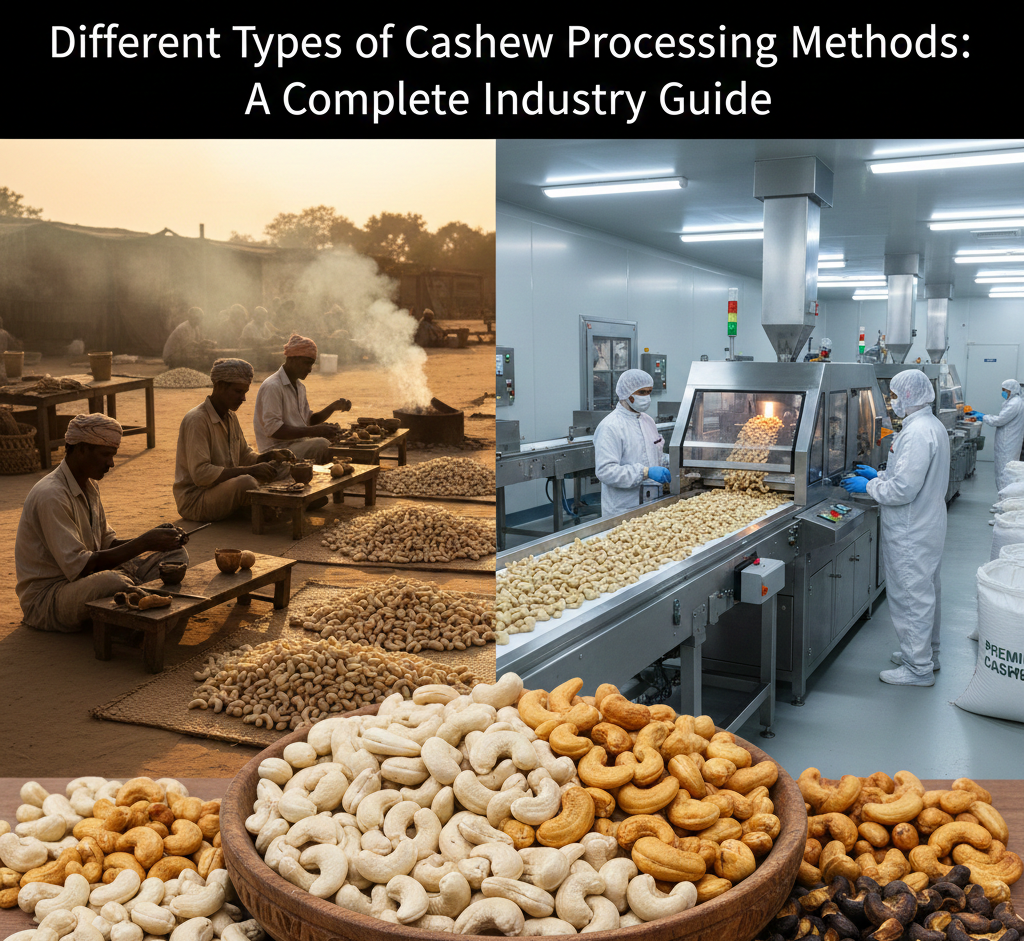
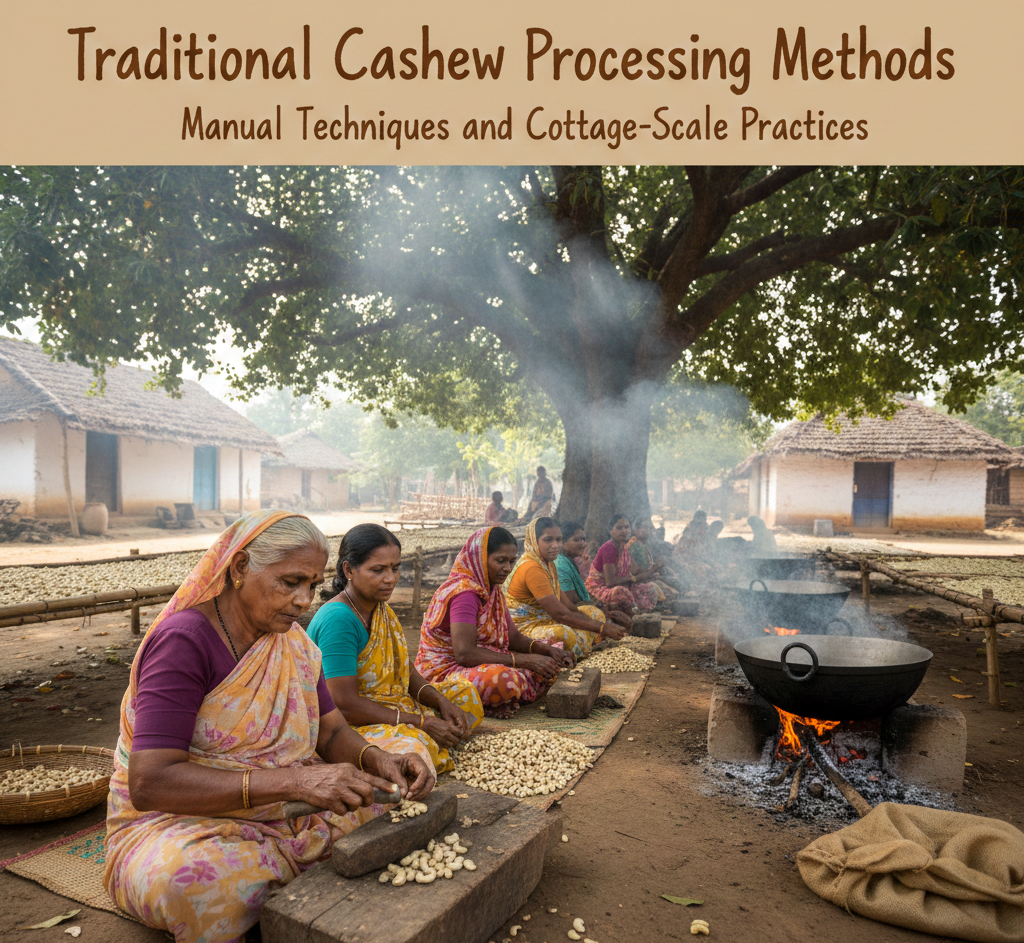
Traditional cashew processing methods represent the foundation of the global cashew industry. Long before the introduction of mechanised shellers and automated grading systems, raw cashew nuts were processed entirely by hand using fire-based roasting, manual shelling, and hand peeling techniques.
Even today, traditional methods continue to operate in small-scale and cottage industries, particularly in rural regions where labour availability is high and capital investment is limited. While modern processing systems have improved efficiency and safety, understanding traditional cashew processing remains essential for evaluating cost structures, quality differences, and industry evolution.
What Are Traditional Cashew Processing Methods?
Traditional cashew processing refers to manual or semi-manual techniques used to convert raw cashew nuts into edible kernels without relying on advanced machinery. These systems are labour-intensive and depend heavily on worker skill and experience.
They are typically used by:
- Small-scale processors
- Cottage industries
- Rural enterprises with limited mechanisation
Although simple in structure, the process requires precision to minimise kernel damage and maintain quality standards.
Step-by-Step Process in Traditional Cashew Processing
Sun Drying of Raw Cashew Nuts
Freshly harvested raw cashew nuts are first dried in sunlight. This step reduces moisture content and prepares the nuts for roasting.
- Nuts are spread in thin layers under direct sunlight
- Drying can take several days depending on climate
- Proper drying reduces shell hardness variability
Insufficient drying can result in uneven roasting and increased breakage during shelling.
Open Pan or Firewood Roasting
Roasting is one of the most critical stages in traditional processing. It serves two main purposes:
- Loosening the shell from the kernel
- Neutralising the corrosive cashew nut shell liquid (CNSL)
- In traditional setups:
- Nuts are roasted in open iron pans or earthen pots
- Firewood is commonly used as fuel
- Temperature control depends on operator experience
This method can be effective but exposes workers to smoke and CNSL vapours, creating occupational health concerns.
Manual Shelling
After roasting, the nuts are cooled and manually cracked open.
Workers use:
- Wooden mallets
- Simple hand cutters
- Basic cracking tools
Manual shelling demands high skill to avoid damaging the kernel. Even with experienced workers, breakage rates are generally higher compared to mechanical or steam-assisted methods.
Kernel Drying and Peeling
Once shelled, the kernels are dried again to loosen the thin brown skin (testa).
Traditional peeling involves:
- Sun drying or mild heat drying
- Hand removal of the testa
This stage requires patience and precision, as excessive handling can split whole kernels into broken grades.
Manual Grading
Grading is fully manual in traditional systems.
Kernels are sorted based on:
- Size
- Colour
- Wholeness
- Surface appearance
Because grading is done by hand, consistency depends heavily on worker training and attention to detail.
Advantages of Traditional Cashew Processing
Despite technological advancements, traditional processing methods offer certain benefits:
- Low Capital Investment
- Minimal equipment is required, making it accessible for small entrepreneurs.
- High Employment Generation
- Labour-intensive processes create significant rural employment opportunities.
- Flexible Production
- Small batches can be processed without the need for large infrastructure.
- Entry-Level Business Model
- Ideal for new processors testing local markets before scaling operations.
Limitations and Challenges
Traditional cashew processing also presents significant constraints:
- High labour dependency
- Lower productivity compared to mechanical systems
- Inconsistent quality control
- Higher kernel breakage rates
- Occupational health and safety risks
- Limited suitability for export-grade standards
As global buyers demand uniform quality and compliance with food safety regulations, traditional methods struggle to compete with modern processing facilities.
Traditional vs Modern Cashew Processing
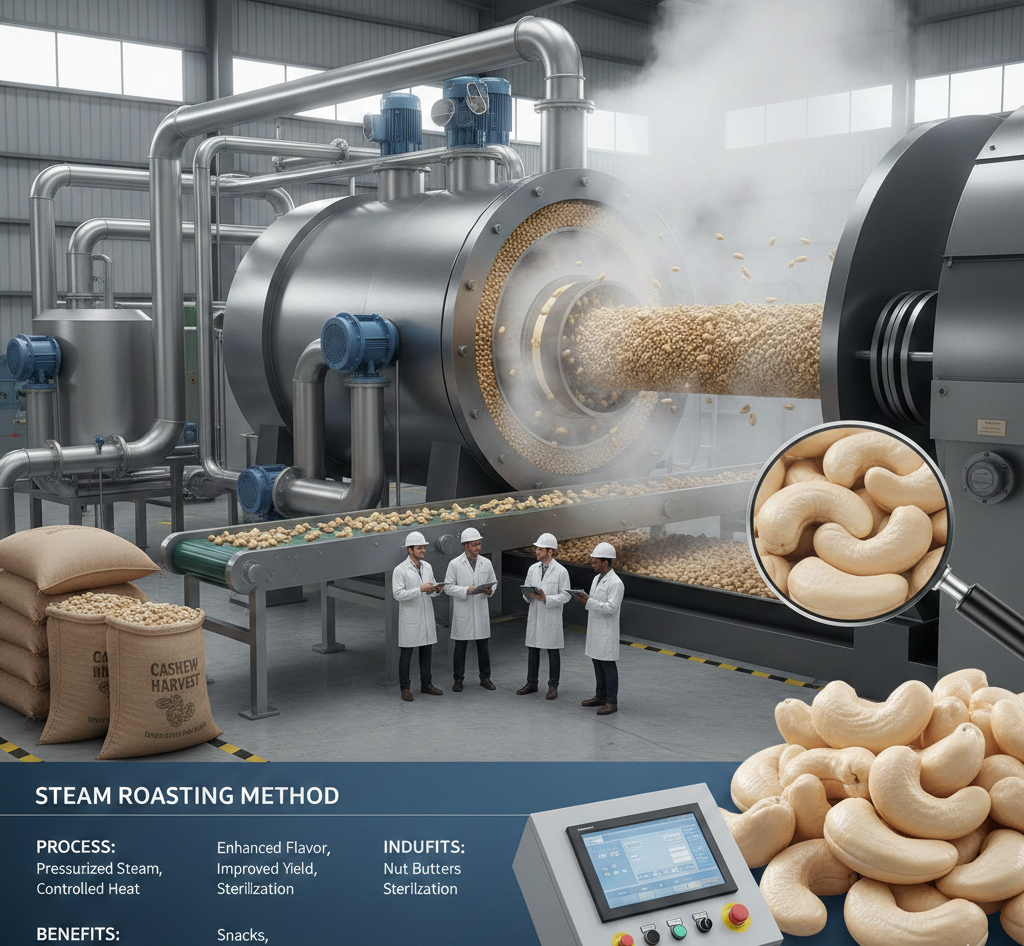
When compared with steam roasting, mechanical shelling, and automated processing plants, traditional methods fall short in scalability and safety. However, they remain economically relevant in regions where mechanisation is not financially viable.
Many processors adopt a hybrid approach beginning with traditional systems and gradually upgrading to semi-mechanised operations as demand increases.
The Continuing Role of Traditional Processing
Traditional cashew processing remains an important part of the industry’s ecosystem. It supports rural economies, preserves processing skills, and serves local markets effectively. While it may not meet the efficiency standards of modern export-focused plants, it continues to provide livelihood opportunities and entry pathways into the cashew business.
For entrepreneurs evaluating the different types of cashew processing methods, understanding traditional practices is the first step toward selecting the right operational model.