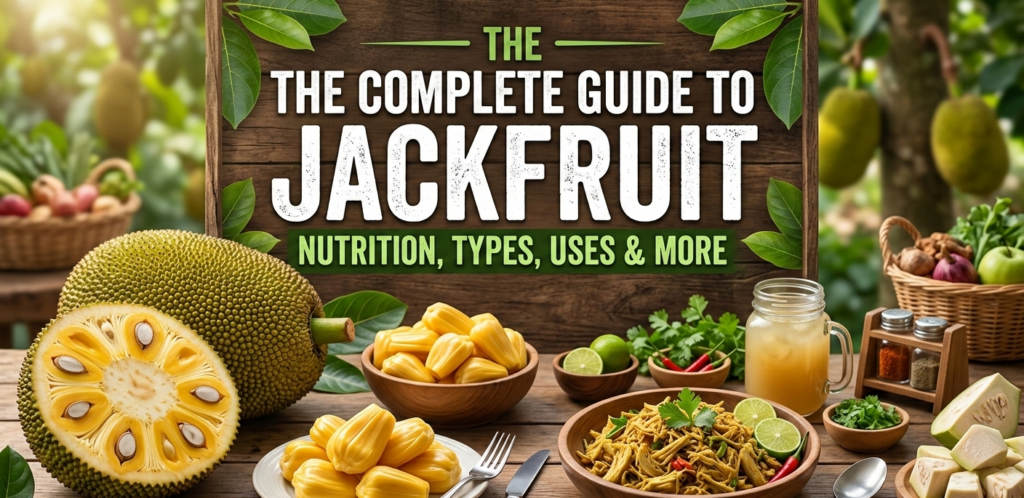
Jackfruit is the world’s largest tree-borne fruit and one of the most versatile tropical foods available today. From sweet yellow bulbs eaten fresh to savory unripe flesh used as a plant-based meat substitute, jackfruit has gained global popularity for both its taste and nutrition.
In this complete guide, you’ll learn everything about jackfruit its origin, nutrition facts, types, health value, culinary uses, storage methods, and more.
What Is Jackfruit?
Jackfruit (scientific name: Artocarpus heterophyllus) is a tropical fruit native to South Asia. It is widely believed to have originated in India and later spread across Bangladesh, Thailand, and other Southeast Asian countries.
Today, jackfruit is grown in:
- South Asia
- Southeast Asia
- Parts of Africa
- Brazil
- Caribbean regions
It grows on the jackfruit tree and can weigh anywhere between 5 kg to over 40 kg (10–90 lbs), making it the largest fruit that grows on a tree.
Taste Profile
Ripe jackfruit → Sweet, fruity, similar to mango + pineapple
Unripe jackfruit → Mild flavor, shredded texture similar to pulled meat
Jackfruit Nutrition Facts (Per 100g)
Here’s a quick nutritional breakdown of ripe jackfruit:
- Calories: ~95 kcal
- Carbohydrates: 23g
- Fiber: 1.5–3g
- Protein: 1.7g
- Fat: 0.6g
- Vitamin C: 13–15% of daily value
- Potassium: ~448 mg
- Magnesium & B vitamins present
Jackfruit is naturally:
- Cholesterol-free
- Low in fat
- Rich in antioxidants
- Unripe jackfruit has slightly fewer sugars and is often preferred in savory dishes.
Types of Jackfruit
There are two main forms you’ll commonly encounter:
Ripe Jackfruit
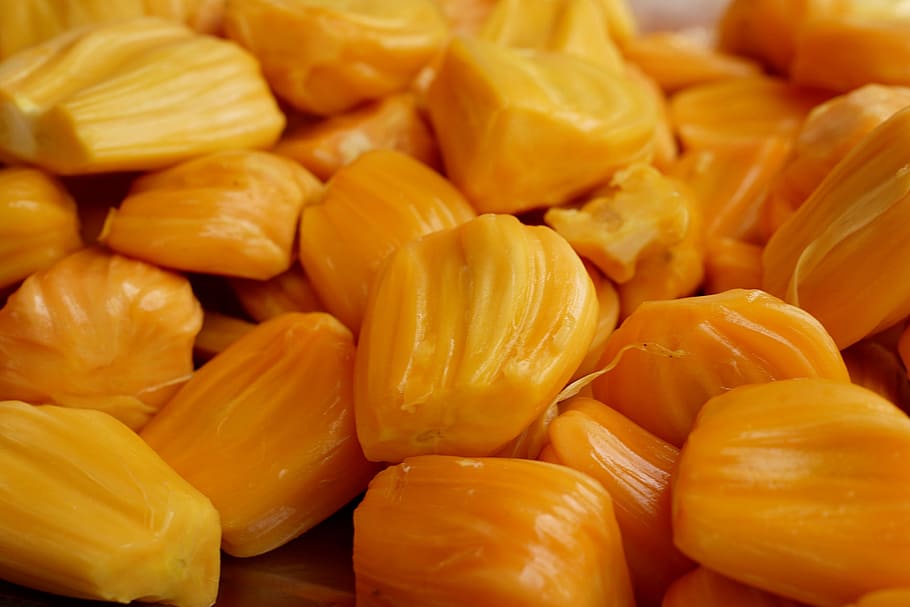
Yellow flesh (called bulbs)
Sweet aroma
Eaten raw or in desserts
High natural sugar content
Best for: Smoothies, desserts, fruit salads.
Unripe (Green) Jackfruit
Firm texture
Neutral taste
Shreds like pulled meat
Lower sugar content
Popular in vegan and vegetarian cooking as a meat substitute.
Soft vs Firm Varieties
Depending on region and variety, jackfruit bulbs may be:
Soft – Very juicy and sweet
Firm – Crisp and less sticky
Both types are edible and used differently in recipes.
Health Benefits Overview
Here’s a quick summary of the real benefits of jackfruit:
- Supports digestion due to fiber
- Boosts immunity (Vitamin C)
- Provides natural energy
- May support heart health (potassium content)
- Contains plant antioxidants
Unripe jackfruit is often considered helpful for people monitoring blood sugar levels when eaten in moderation. See our dedicated page regarding the benefits of jackfruit.
Jackfruit as a Meat Substitute
Unripe jackfruit has become globally popular in plant-based diets because of its texture.
When cooked and shredded, it resembles pulled pork or chicken. Unlike tofu or soy, jackfruit:
- Is naturally gluten-free
- Is soy-free
- Has a neutral taste that absorbs spices well
However, it is lower in protein compared to legumes and tofu, so pairing it with protein-rich foods is recommended.
How to Choose a Good Jackfruit
Buying the right jackfruit depends on whether you want it ripe or unripe.
For Ripe Jackfruit:
- Yellowish skin
- Strong sweet aroma
- Slightly soft when pressed
- Dull hollow sound when tapped
For Unripe Jackfruit:
- Green skin
- Firm and hard
- Minimal smell
- If buying cut pieces, ensure the bulbs look bright and fresh, not dull or slimy.
How to Cut Jackfruit Safely
Jackfruit contains a sticky white latex sap that can make cutting messy.
Cutting Tips:
- Oil your knife and hands before cutting.
- Cut the fruit lengthwise into halves.
- Remove the thick core.
- Separate the yellow bulbs.
- Remove seeds if necessary.
Pro Tip: Line your cutting surface with newspaper or parchment paper to reduce cleanup.
How to Store Jackfruit
Fresh Ripe Jackfruit
- Store bulbs in an airtight container
- Refrigerate up to 5 days
Unripe Jackfruit
- Store whole at room temperature for a few days
- Refrigerate once cut
- Freezing
- Remove bulbs
- Store in freezer-safe bags
- Can last 2–3 months
Jackfruit Around the World
Jackfruit plays a significant role in many cuisines:
- In India – Used in curries and chips
- In Sri Lanka – Cooked as a staple dish
- In Thailand – Used in sweets and snacks
It is considered a versatile and culturally important fruit in tropical regions.
Jackfruit: Frequently Asked Questions
Is jackfruit a fruit or vegetable?
Botanically, it is a fruit. However, unripe jackfruit is used as a vegetable in cooking.
Is jackfruit good for weight loss?
It can support weight management when eaten in moderation due to fiber content, but portion control matters because ripe jackfruit contains natural sugars.
Does jackfruit contain protein?
Yes, but in small amounts compared to beans or lentils.
Can diabetics eat jackfruit?
Unripe jackfruit is often considered a better option than ripe due to lower sugar levels, but individuals should consult a healthcare professional.
Jackfruit is more than just a tropical fruit it’s a nutritional powerhouse, culinary chameleon, and increasingly popular plant-based ingredient.
Whether you enjoy it sweet and ripe or savory and unripe, jackfruit offers incredible versatility for modern kitchens and traditional recipes alike.
As you continue exploring jackfruit recipes, benefits, and uses, this guide serves as your foundation for understanding everything about this remarkable fruit.