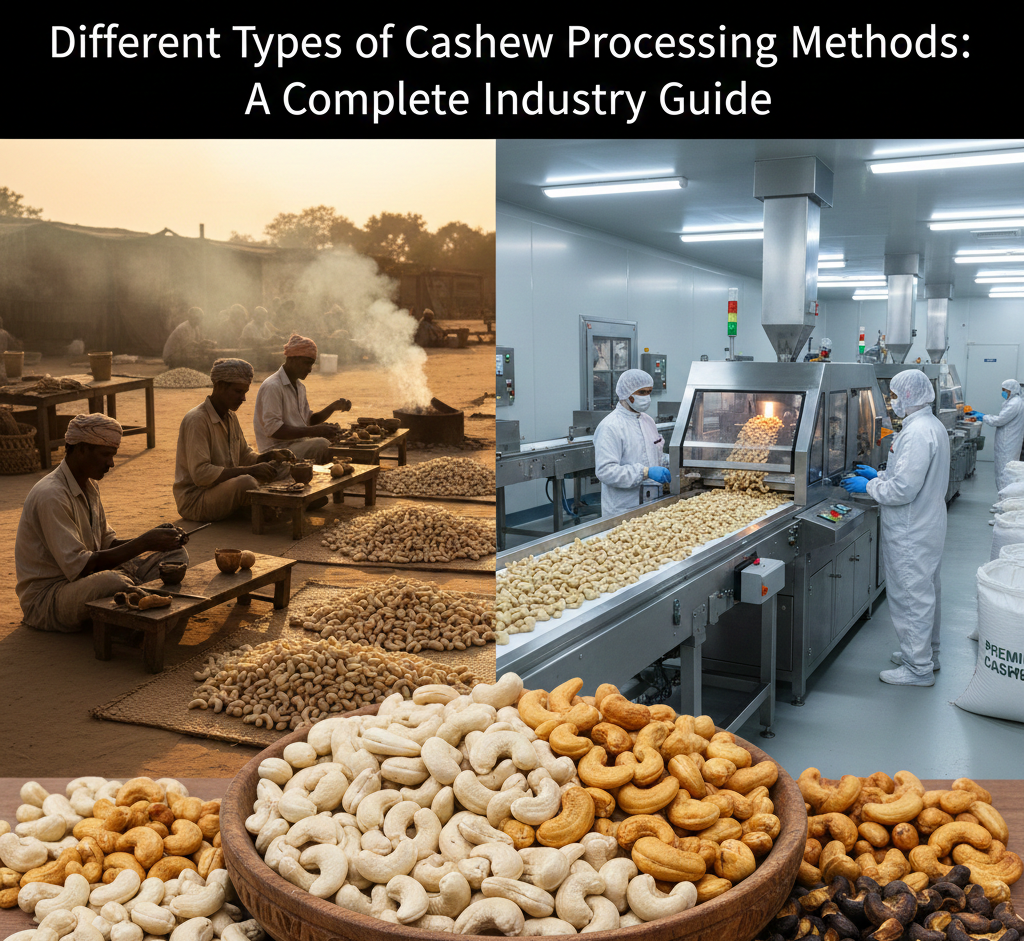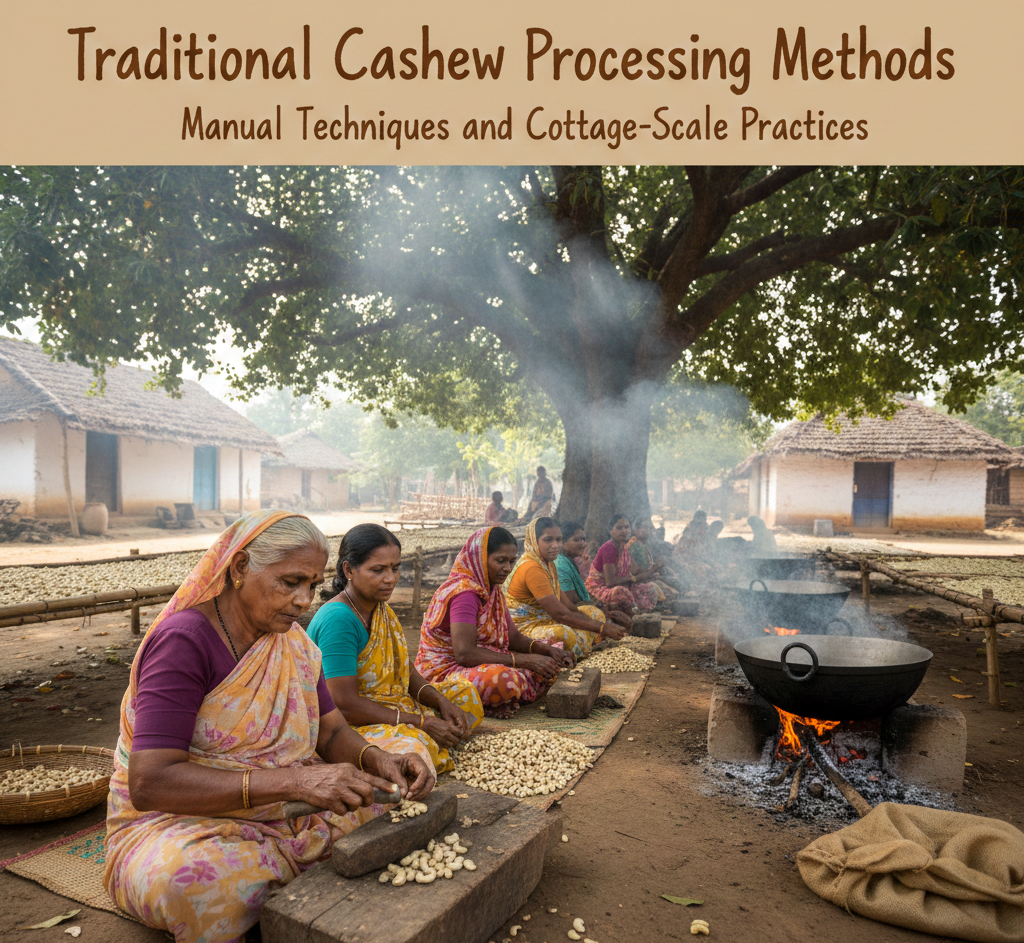
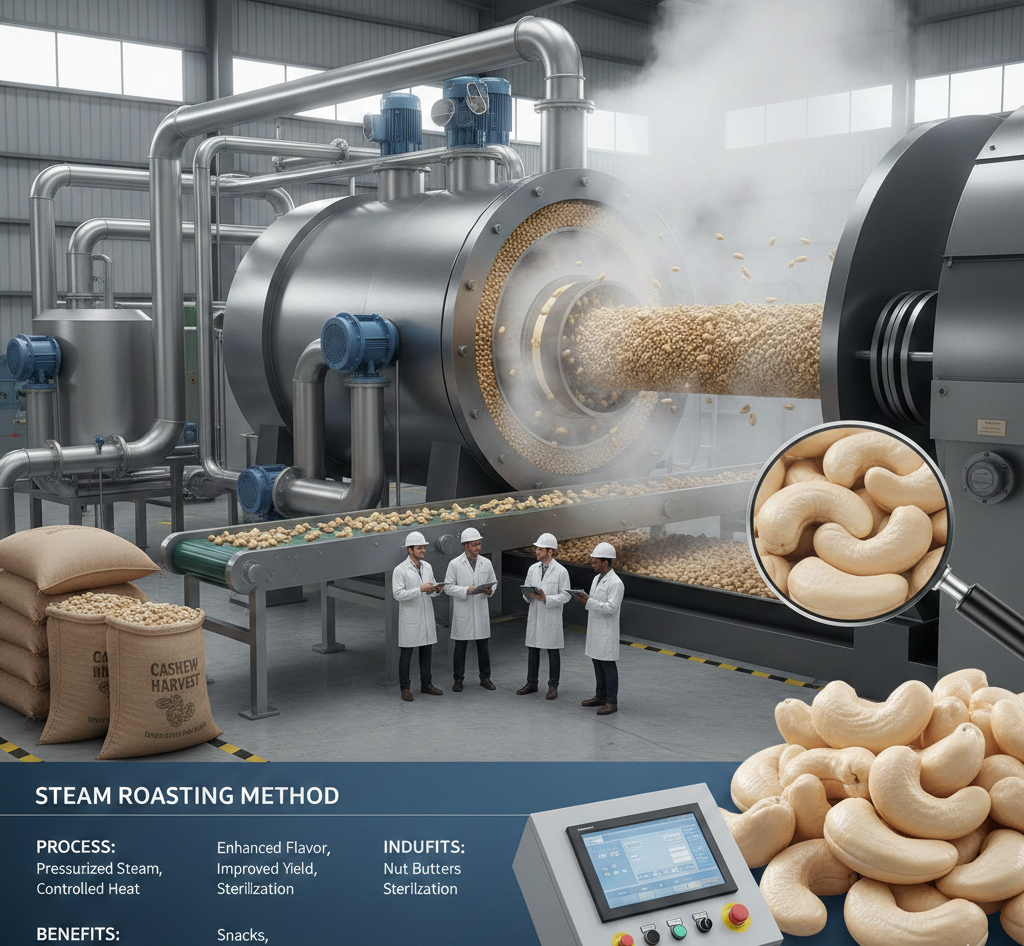
The steam roasting method is one of the most widely adopted modern techniques in cashew processing. Designed to improve kernel quality, enhance worker safety, and reduce breakage, steam roasting has gradually replaced traditional open-fire roasting in export-oriented facilities.
As global demand for premium-grade cashew kernels continues to grow, processors rely on controlled heat treatment systems to maintain consistency and comply with international food safety standards. Steam roasting offers that balance between efficiency, scalability, and quality.
What Is the Steam Roasting Method?
Steam roasting is a controlled process in which raw cashew nuts are exposed to pressurised steam inside a closed chamber. Unlike traditional pan roasting, this method uses regulated temperature and pressure to evenly heat the nuts before shelling.
The method is widely used in major cashew-producing countries such as India and Vietnam, where export-grade processing is a priority.
The primary objective of steam roasting is to soften the hard outer shell while coagulating the cashew nut shell liquid (CNSL), making the shell easier and safer to remove.
Step-by-Step Steam Roasting Process
Pre-Cleaning and Moisture Control
Before steaming, raw cashew nuts are cleaned to remove dust, stones, and debris. They are then preconditioned to achieve optimal moisture levels. Moisture balance is critical because it directly affects shell softening and kernel recovery.
Improper conditioning can result in uneven shell cracking and increased breakage.
Steam Cooking Under Pressure
The nuts are loaded into a steam cooker or autoclave chamber. Steam is introduced under carefully controlled pressure and temperature.
This stage ensures:
- Uniform heat penetration
- Reduced exposure to CNSL fumes
- Even softening of shells
Unlike open roasting, steam treatment allows operators to control time and pressure precisely, which improves overall consistency.
Cooling and Conditioning
After steaming, the nuts are removed and allowed to cool gradually. This stabilises internal moisture levels and prevents stress cracks in the kernels.
Controlled cooling improves shelling performance and enhances the recovery of whole kernels.
Shelling
Once conditioned, the nuts proceed to shelling. Steam-treated nuts are easier to crack because the shell separates more cleanly from the kernel.
Shelling can be done manually or using mechanical shellers. Because the shell is uniformly softened, breakage rates are generally lower than in traditional roasting systems.
Post-Shelling Drying and Peeling
After shell removal, kernels undergo drying to loosen the testa, the thin brown skin surrounding the kernel. Controlled drying prevents brittleness and helps maintain kernel integrity.
Peeling is then carried out manually or mechanically, followed by grading.
Advantages of Steam Roasting in Cashew Processing
Steam roasting provides several operational and commercial benefits.
It improves kernel appearance by reducing scorching and discoloration. This is especially important for premium grades destined for international markets.
It enhances worker safety by minimising direct exposure to smoke and CNSL vapours. Closed systems significantly reduce occupational hazards compared to open-fire roasting.
It supports higher productivity. Because the process is standardised, it enables better workflow integration with mechanical shelling and automated grading systems.
It also aligns with international food safety frameworks such as those developed by the Codex Alimentarius Commission, which influence hygiene and processing standards in global trade.
Limitations of Steam Roasting
Despite its advantages, steam roasting requires:
- Investment in boiler systems and pressure vessels
- Reliable energy supply
- Skilled technical supervision
- Regular maintenance of steam equipment
For very small processors, these requirements may present cost barriers. However, for medium and large-scale units, the long-term gains in quality and yield often justify the investment.
Why Steam Roasting Is Preferred for Export Markets
International buyers demand uniform colour, minimal breakage, and safe handling practices. Steam roasting allows processors to maintain better control over these quality parameters.
Countries such as India and Vietnam have widely adopted steam-based systems to maintain competitiveness in global markets.
Because of its balance between cost, quality, and scalability, steam roasting is often considered the industry standard for modern cashew processing units that are not yet fully automated.
Strategic Role in Modern Cashew Processing
For entrepreneurs evaluating different types of cashew processing methods, steam roasting represents a practical step toward modernization. It improves operational efficiency while maintaining manageable investment levels.
Many processors transition from traditional roasting to steam systems before eventually upgrading to fully automated plants. In this way, steam roasting acts as a bridge between labour-intensive cottage processing and industrial-scale automation