Proso Millet is an ancient cereal grain that has been cultivated for thousands of years across Asia and Europe. Known as Cheena or Barri in parts of India, this millet is valued for its nutritional benefits, short growing cycle, and adaptability to different climatic conditions.
Although less widely known than some other millet varieties, proso millet has long played an important role in traditional diets and agriculture. Today, it is gaining attention as a nutritious whole grain that can contribute to healthier and more sustainable food systems.
What Is Proso Millet?
Proso millet belongs to the species Panicum miliaceum. It produces small, round grains that vary in colour from creamy white to yellow and red. The crop is known for its short growing season, which allows farmers to harvest it relatively quickly compared with many other cereal crops.
Historically, proso millet was cultivated in ancient civilizations in Asia and Europe and was later introduced to other regions of the world. Its ability to grow in dry conditions and marginal soils makes it a useful crop for farmers in semi-arid areas.
Nutritional Profile of Proso Millet
Proso millet is considered a nutrient-rich grain that provides several essential nutrients important for overall health.
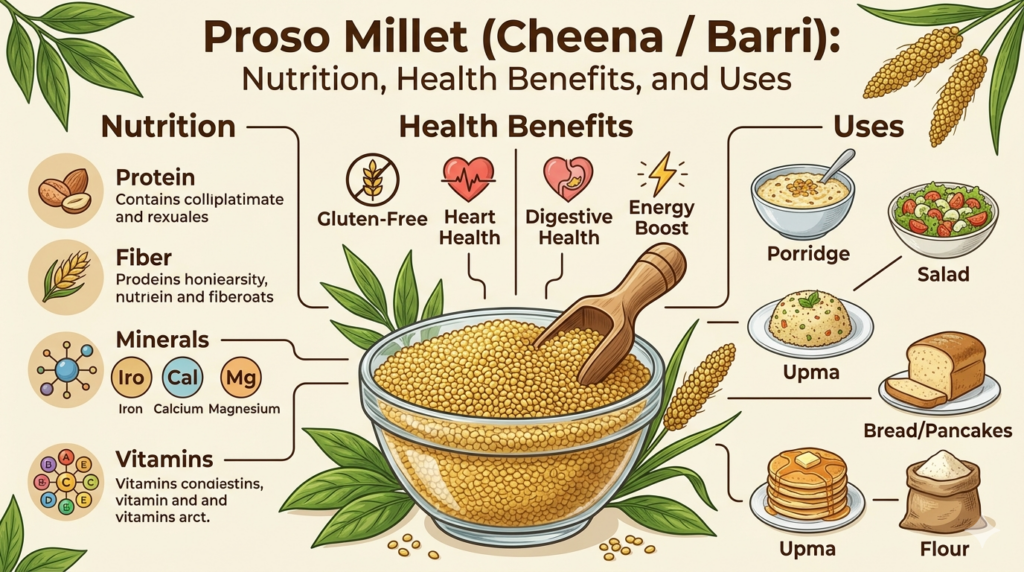
Key nutrients found in proso millet include:
- Protein: Supports muscle growth and tissue repair
- Dietary fiber: Helps maintain digestive health
- B vitamins: Support energy metabolism
- Magnesium and phosphorus: Important for bone and muscle function
- Antioxidants: Help protect cells from oxidative stress
Like other millets, proso millet is naturally gluten-free, making it suitable for individuals who avoid gluten in their diets.
Health Benefits of Proso Millet
Incorporating proso millet into the diet may offer several potential health benefits.
Supports Digestive Health
The fiber content in proso millet helps promote healthy digestion and supports gut function.
Helps Manage Blood Sugar Levels
Whole grains such as proso millet digest more slowly than refined grains, which may help maintain stable blood sugar levels for people managing conditions such as Type 2 Diabetes.
Supports Heart Health
The presence of minerals such as magnesium, along with dietary fiber, may contribute to maintaining healthy cholesterol levels and cardiovascular function.
Provides Sustainable Energy
The complex carbohydrates in proso millet release energy gradually, helping sustain energy levels throughout the day.
Culinary Uses of Proso Millet
Proso millet can be used in a wide range of dishes due to its mild flavour and versatility. It can be cooked as a whole grain, ground into flour, or used as an ingredient in processed food products.
Common culinary uses include:
- Porridge or breakfast cereals
- Millet-based salads and grain bowls
- Substitute for rice in various dishes
- Flour for baking breads and snacks
Its light texture and mild taste allow it to blend easily with vegetables, spices, and other ingredients.
Proso Millet in Sustainable Agriculture
Proso millet is valued by farmers because of its short growing period and relatively low water requirements. The crop can grow well in regions with limited rainfall and can be cultivated in soils where other cereals may struggle.
These characteristics make proso millet a useful crop for improving agricultural resilience in the face of changing climate conditions.
Global interest in millets has grown significantly in recent years. To promote their nutritional and environmental benefits, the United Nations designated International Year of Millets 2023 to encourage greater awareness and production of these grains.
The Rising Interest in Proso Millet
As consumers increasingly seek whole grains that support healthy diets and sustainable agriculture, proso millet is gradually gaining recognition. Its combination of nutritional value, versatility in cooking, and resilience in farming makes it a promising grain for the future of food.