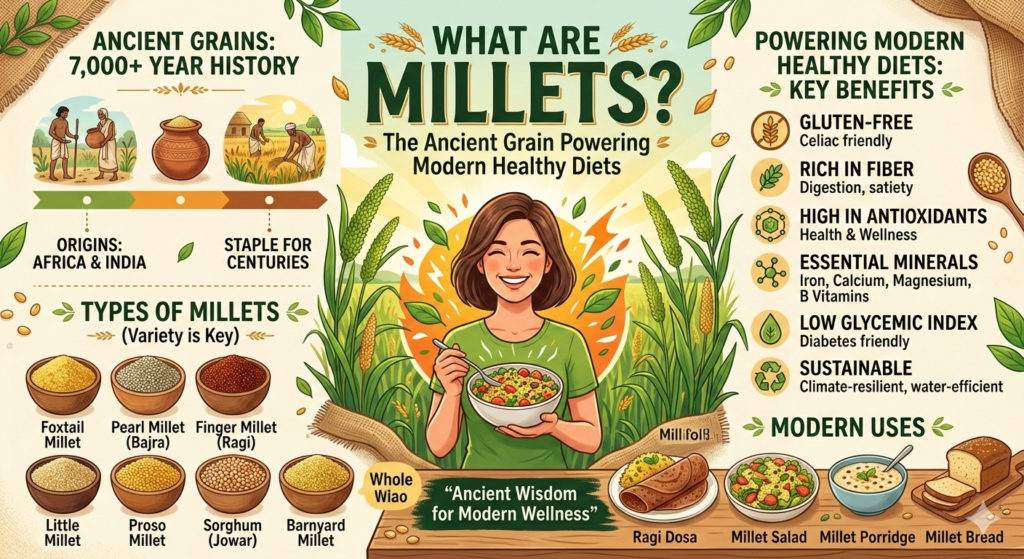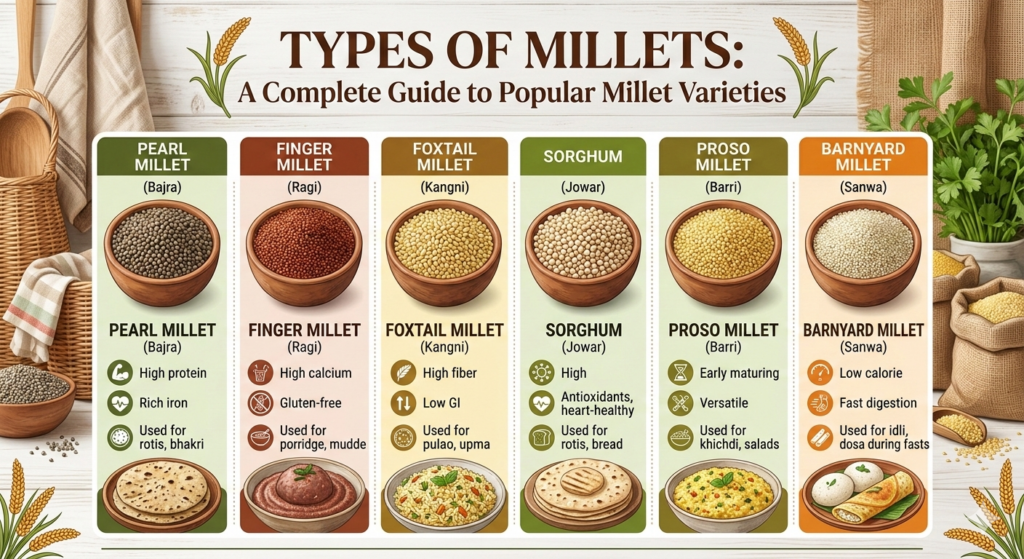
Pearl Millet is one of the most widely cultivated millet varieties in the world. Known as Bajra in many parts of India, this ancient grain has been a staple food in arid and semi-arid regions for centuries. It is valued for its ability to grow in harsh climates with minimal water while providing significant nutritional benefits.
Pearl millet plays an important role in traditional diets across Asia and Africa. In recent years, it has also gained attention globally as consumers seek healthier whole grains that offer both nutritional value and environmental sustainability.
What Is Pearl Millet?
Pearl millet belongs to the species Pennisetum glaucum and is known for its small, round grains that range in colour from pale yellow to grey. The crop is highly resilient and can thrive in poor soil conditions and high temperatures, making it particularly suitable for regions with limited rainfall.
Because of its adaptability, pearl millet is widely cultivated in parts of India, Africa, and the Middle East. It is commonly used to prepare flatbreads, porridges, and a variety of traditional dishes.
Nutritional Profile of Pearl Millet
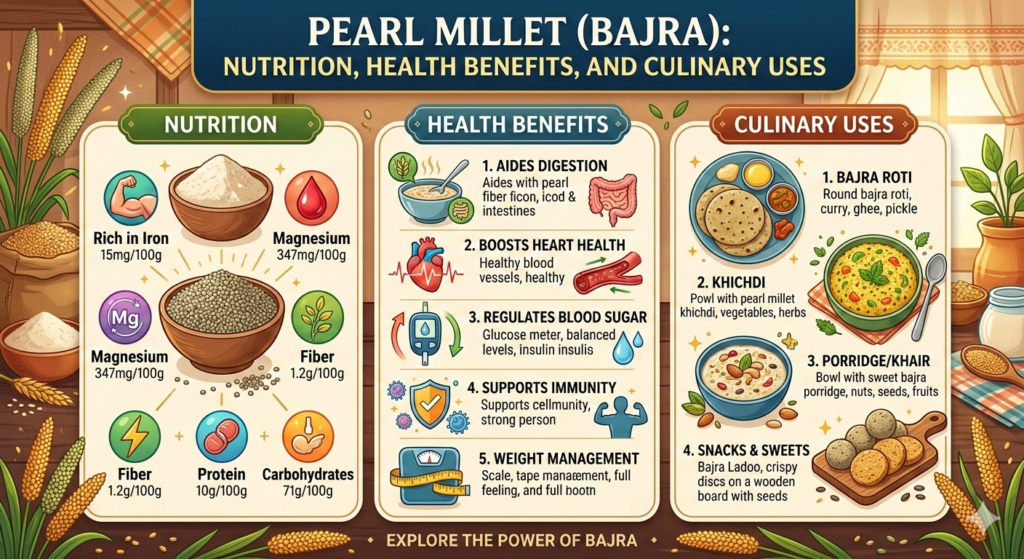
Pearl millet is considered a nutrient-dense grain. It provides a good balance of carbohydrates, protein, dietary fiber, and essential minerals.
Key nutrients found in pearl millet include:
- Protein: Higher protein content than many other cereal grains
- Dietary fiber: Supports digestion and gut health
- Iron: Important for maintaining healthy red blood cells
- Magnesium: Supports muscle and nerve function
- B vitamins: Help the body convert food into energy
Because it is naturally gluten-free, pearl millet is also suitable for people who need to avoid gluten in their diets.
Health Benefits of Pearl Millet
Regular consumption of pearl millet may support several aspects of health.
Supports Heart Health
The fiber and magnesium content in pearl millet can help maintain healthy cholesterol levels and support cardiovascular function.
Helps Manage Blood Sugar
Pearl millet has a relatively low glycemic index compared with refined grains. This means it releases glucose more slowly into the bloodstream, which can be beneficial for individuals managing conditions such as Type 2 Diabetes.
Promotes Digestive Health
The high fiber content helps improve digestion and supports a healthy gut.
Provides Sustained Energy
Because it is a whole grain with complex carbohydrates, pearl millet can provide steady energy throughout the day.
Culinary Uses of Pearl Millet
Pearl millet is widely used in traditional cuisines and is increasingly being incorporated into modern recipes. The grain can be consumed whole, ground into flour, or used in processed food products.
Some common culinary uses include:
- Flatbreads: Bajra roti and bhakri
- Porridges: Nutritious breakfast dishes
- Grain bowls and salads
- Baked goods using millet flour
Its slightly nutty flavour makes it a versatile ingredient that works well in both savory and sweet dishes.
Pearl Millet in Sustainable Agriculture
Beyond its nutritional value, pearl millet is also important for sustainable agriculture. The crop requires less water than many other cereals and can grow in regions where other grains fail. This makes it a valuable crop for farmers facing climate challenges and water scarcity.
Efforts to promote millets globally have increased in recent years. To raise awareness about their role in sustainable food systems, the United Nations declared International Year of Millets 2023.
The Growing Popularity of Pearl Millet
As interest in whole grains and sustainable foods grows, pearl millet is gaining renewed attention from nutritionists, chefs, and consumers. Its combination of resilience, nutrition, and culinary versatility makes it an important grain for both traditional diets and modern health-focused eating patterns.
By incorporating pearl millet into everyday meals, consumers can benefit from a nutrient-rich grain while supporting agricultural practices that are better suited to a changing climate.