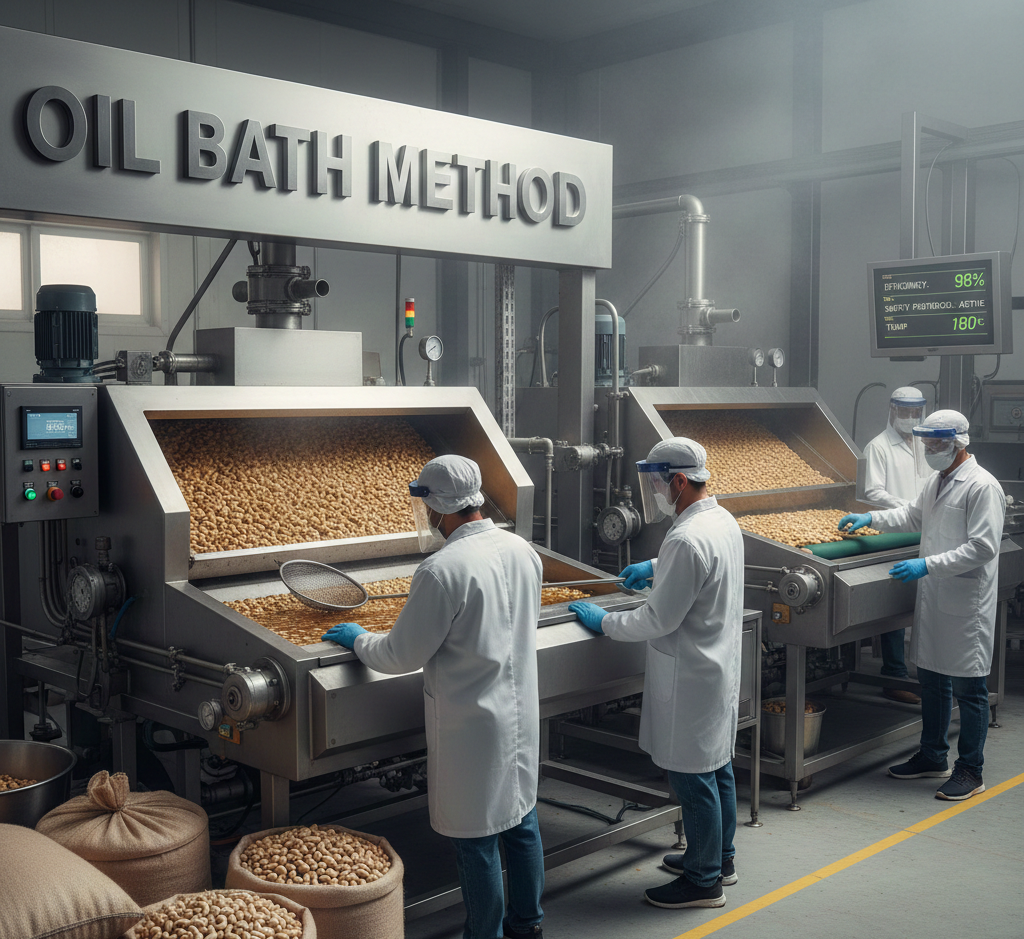
The oil bath method is one of the more industrialised traditional techniques used in cashew processing. Developed to improve roasting efficiency and shell oil recovery, this method uses heated cashew nut shell liquid (CNSL) as a medium to treat raw cashew nuts before shelling.
While the oil bath process increases throughput and facilitates better shell separation, it also raises serious occupational safety and environmental concerns. Over time, stricter regulatory standards have led many processors to replace oil bath systems with steam-based alternatives.
This article explains how the oil bath method works, its operational benefits, associated risks, and its place in the modern cashew industry.
What Is the Oil Bath Method?
The oil bath method involves immersing raw cashew nuts in heated cashew nut shell liquid (CNSL). CNSL is a naturally occurring, caustic substance found between the shell and the kernel.
In this process:
- CNSL is extracted or collected from previous roasting batches
- The liquid is heated in a tank or chamber
- Raw cashew nuts are dipped into the hot oil for a controlled period
- The high temperature softens the shell and helps release additional CNSL from the shell structure.
This method has historically been used in processing regions such as India and parts of Brazil, particularly in medium-scale industrial units.
Step-by-Step Oil Bath Processing
Pre-Drying and Cleaning
Raw cashew nuts are first cleaned and dried to remove surface impurities and reduce moisture content. Proper drying improves oil penetration and shell softening.
Heating the CNSL
CNSL collected from previous batches is heated in a metal container or tank. The oil reaches high temperatures before raw nuts are introduced.
This stage requires careful supervision because overheating can lead to excessive fumes and fire hazards.
Immersion of Raw Cashew Nuts
The raw nuts are immersed in the heated CNSL for a specific duration.
During immersion:
- The shell becomes brittle
- Additional shell oil drains out
- The internal kernel separates more easily
- The oil bath allows rapid heat transfer, which speeds up processing compared to open roasting.
Draining and Cooling
- After immersion, the nuts are removed and allowed to drain. Excess oil is collected for reuse.
- The nuts are then cooled before proceeding to shelling.
Shelling and Further Processing
- Once cooled, shelling is performed manually or mechanically. Because the shell has been heavily heat-treated, cracking is generally easier.
- The kernels then undergo drying, peeling, and grading as part of standard post-shelling operations.
Advantages of the Oil Bath Method
The oil bath process offers several operational benefits.
- It enables high processing speed due to rapid heat transfer.
- It allows efficient recovery of CNSL, which has industrial applications in paints, coatings, resins, and friction materials.
- It improves shell brittleness, making cracking easier in certain conditions.
For processors focusing on both kernel production and CNSL extraction, this method can increase overall economic value.
Safety and Environmental Concerns
Despite its efficiency, the oil bath method presents significant risks.
CNSL is corrosive and can cause severe skin burns if not handled properly. Workers may be exposed to hot oil splashes and toxic fumes, particularly in poorly ventilated facilities.
Environmental concerns include:
- Disposal of contaminated residues
- Air pollution from fumes
- Fire hazards due to flammable vapours
As international labour and environmental standards have tightened influenced by frameworks such as those promoted by the International Labour Organization many processing regions have moved away from oil bath systems in favour of safer alternatives.
Regulatory and Market Implications
Export markets increasingly require safe and hygienic processing conditions. Buyers in regions with strict food safety and workplace regulations prefer steam-based systems over oil bath processing.
Countries such as India and Vietnam have gradually modernised their facilities to reduce reliance on oil immersion methods.
In some areas, oil bath processing is either heavily regulated or phased out due to occupational health concerns.
Current Relevance in the Cashew Industry
Today, the oil bath method is far less common in export-oriented plants. However, it may still be found in certain industrial setups where CNSL extraction is a priority and strict safety controls are implemented.
For processors evaluating different types of cashew processing methods, oil bath systems represent a higher-risk, higher-output approach that must be carefully assessed against safety compliance requirements and market expectations.
In most modern contexts, steam roasting offers a safer and more internationally accepted alternative.