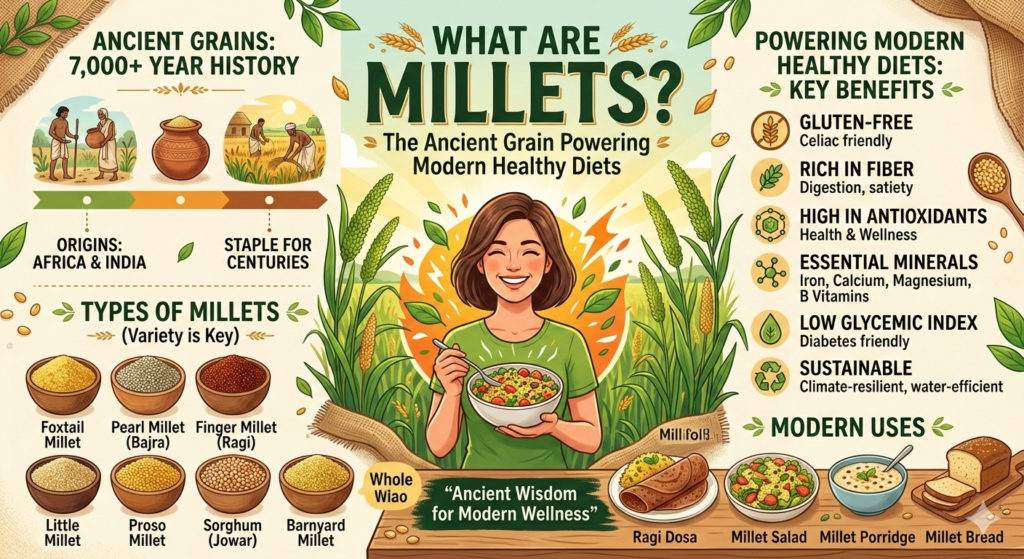
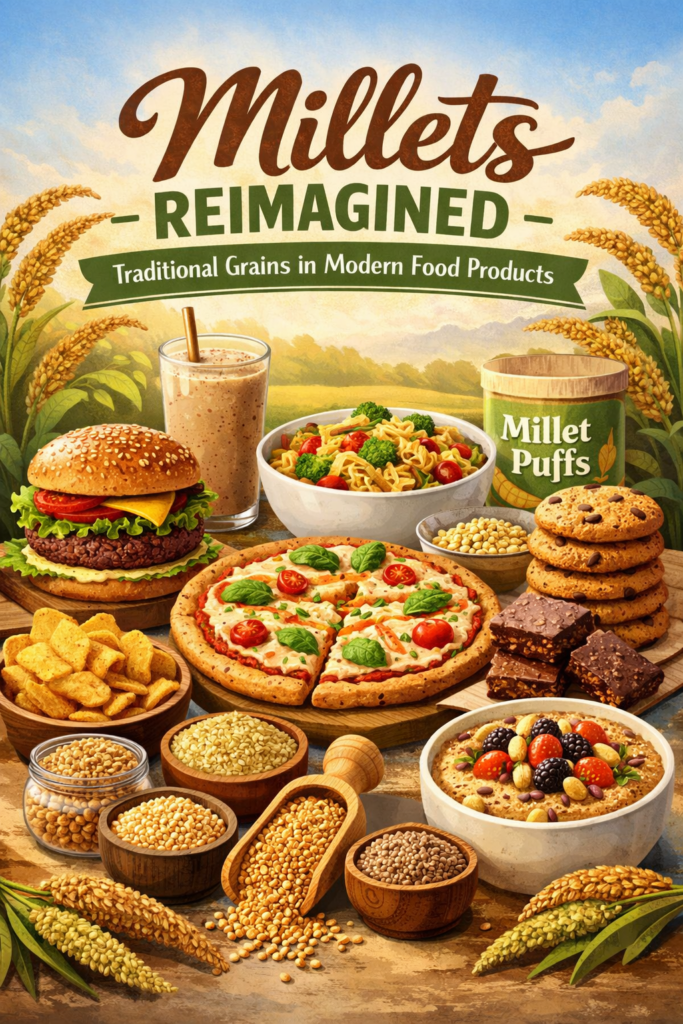
Once known primarily as traditional staples in rural households, millets are steadily finding a new identity in modern food products. These ancient grains, long valued for their resilience and nutritional richness, are now being reintroduced in formats that suit contemporary lifestyles and changing consumer preferences.
From breakfast cereals and snack bars to ready-to-cook mixes and baked products, millets are moving beyond their conventional use and becoming a visible part of modern retail shelves.
From staple grain to packaged product
Millets have traditionally been consumed in the form of porridges, rotis, dosas, and rice alternatives. Today, the same grains are being transformed into a wide range of value-added products.
Some of the most common modern millet-based products include:
- millet breakfast cereals
- granola and nutrition bars
- cookies and baked snacks
- ready-to-cook dosa and idli mixes
- instant upma and porridge blends
- millet noodles and pasta
- flour blends for baking
This product diversification is helping make millets more accessible to urban consumers and younger audiences.
Convenience-led innovation
One of the biggest drivers behind the renewed popularity of millets is convenience. Consumers are increasingly looking for products that combine health with ease of use.
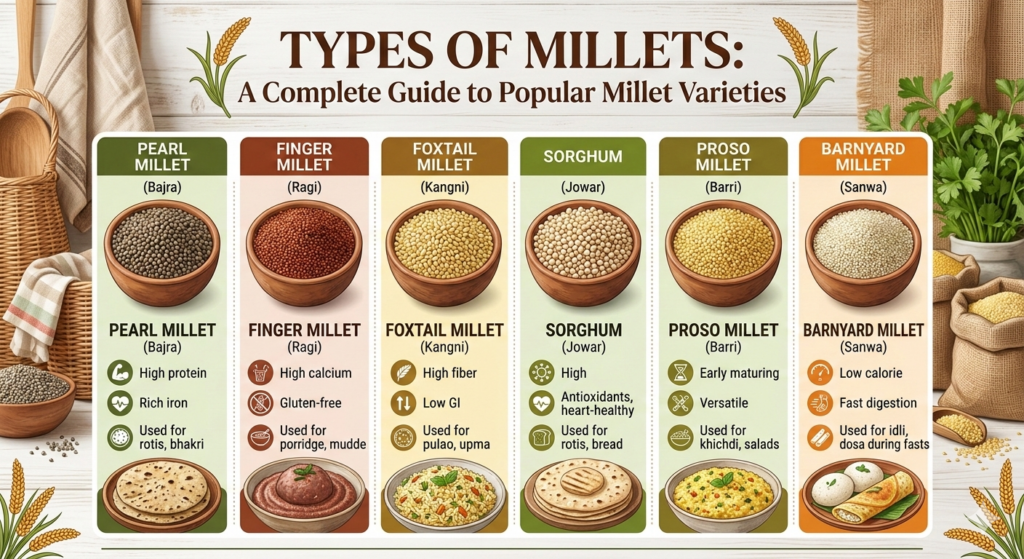
As a result, traditional grains such as Pearl Millet, Finger Millet, and Foxtail Millet are now appearing in instant mixes, ready-to-eat snacks, and on-the-go meal formats.
This evolution is helping millets transition from raw grain purchases to everyday packaged food products.
Health-focused product appeal
Millets are widely associated with whole-grain nutrition, dietary fiber, and plant-based protein. This makes them highly suitable for modern health-oriented product categories.
Food brands and product developers are increasingly using millets in:
- low-refined grain alternatives
- wellness snacks
- breakfast products
- plant-based meal solutions
- functional food ranges
This growing product appeal is driven by the increasing demand for wholesome and minimally processed ingredients.
Traditional roots, contemporary relevance
What makes millet products particularly compelling is their ability to bridge tradition and innovation. The grains carry strong cultural familiarity while fitting seamlessly into contemporary consumption habits.
By transforming traditional staples into convenient product formats, millets are being reintroduced to new consumer segments without losing their original identity.
A grain for the future
The reimagining of millets into modern food products reflects a broader shift in food consumption toward traditional ingredients presented in contemporary formats.
As consumers continue to seek healthier and more sustainable food choices, millets are well positioned to remain a strong ingredient across product categories, combining heritage, nutrition, and convenience in one evolving food story.