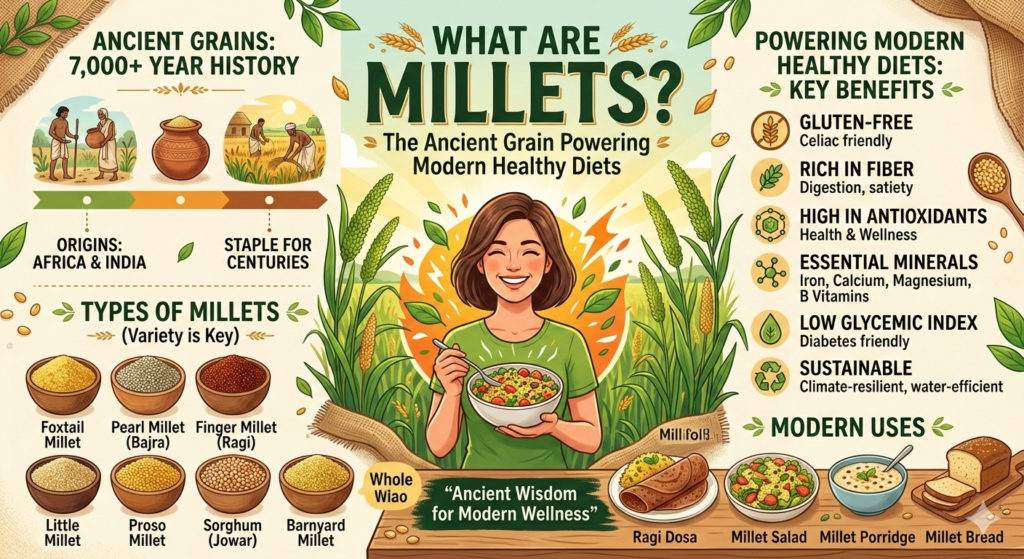


In today’s fast-paced world, digestive issues like bloating, constipation, and IBS have become incredibly common. While many turn to supplements, the secret to a happy gut might actually lie in “ancient grains.”
A recent feature by All Sow Great highlights how millets small-seeded grasses used for millennia are making a comeback as the ultimate superfood for digestive wellness. Here is how these hardy grains work wonders for your internal health.
The Power of Dietary Fiber
The most immediate benefit of millets is their extraordinary fiber content. They contain both soluble and insoluble fiber, which perform two critical roles:
- Preventing Constipation: Insoluble fiber adds bulk to your stool, helping it move smoothly through the digestive tract.
- Regulating Metabolism: Soluble fiber turns into a gel-like substance that slows down the absorption of sugar and cholesterol, keeping your system balanced.
A Natural Prebiotic
Your gut is home to trillions of bacteria (the microbiome) that influence everything from your immunity to your mood. Millets act as a prebiotic, meaning they provide the “food” that beneficial probiotics need to thrive. By nourishing these good bacteria, millets help maintain a balanced and resilient gut environment.
Gluten-Free and Gentle
For those with Celiac disease or gluten sensitivity, traditional grains like wheat can cause severe inflammation and damage to the small intestine. Millets are naturally gluten-free, making them a safe, nutrient-dense alternative that is much gentler on the stomach lining.
Which Millet Should You Choose?
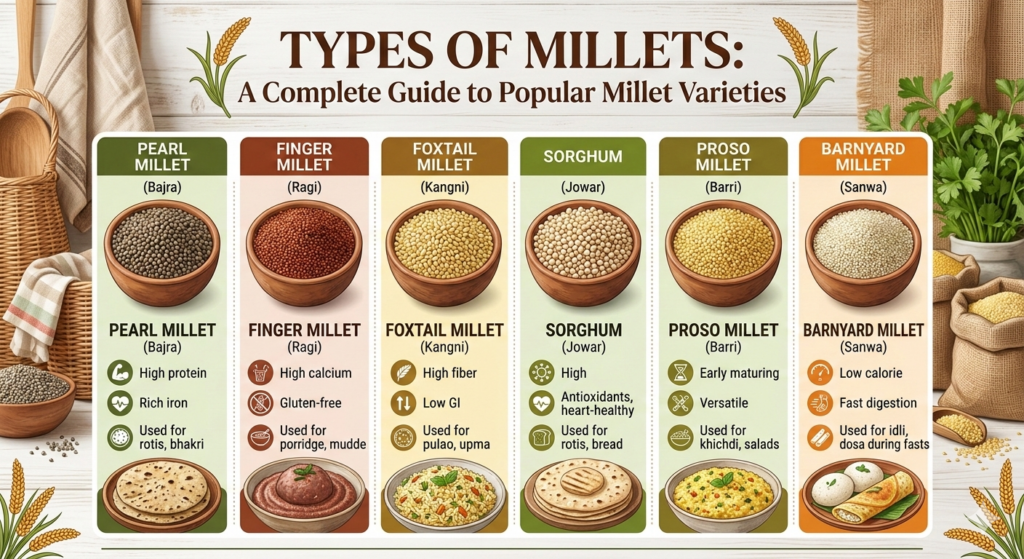
Different millets offer unique digestive “superpowers”:
- Sorghum (Jowar): Packed with antioxidants that help reduce inflammation in the digestive tract.
- Pearl Millet (Bajra): Has an alkaline nature, which is excellent for reducing acidity and soothing the stomach.
- Finger Millet (Ragi): A top-tier source of calcium and fiber, often recommended for its easy digestibility.
- Foxtail Millet (Kangni): Known for having a low Glycemic Index, helping regulate both digestion and blood sugar.
Easy Ways to Eat for Your Gut
Incorporating these grains into your daily routine is simpler than you might think:
- Breakfast: Swap processed flakes for Jowar (Sorghum) Poha or a warm Ragi porridge.
- Lunch: Use cooked millets as a base for salads or “Buddha bowls” instead of white rice.
- Snacks: Look for millet-based savory mixes (chivda) or roasted millet clusters for a gluten-free crunch.
A healthy life starts in the gut. By switching from refined grains to fiber-rich, prebiotic millets, you aren’t just eating a meal you’re investing in long-term digestive harmony.