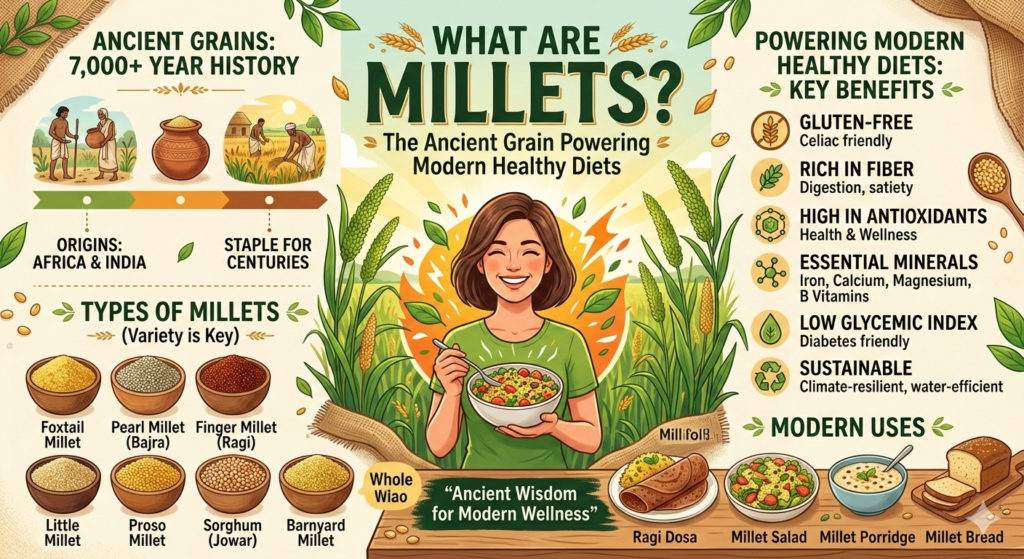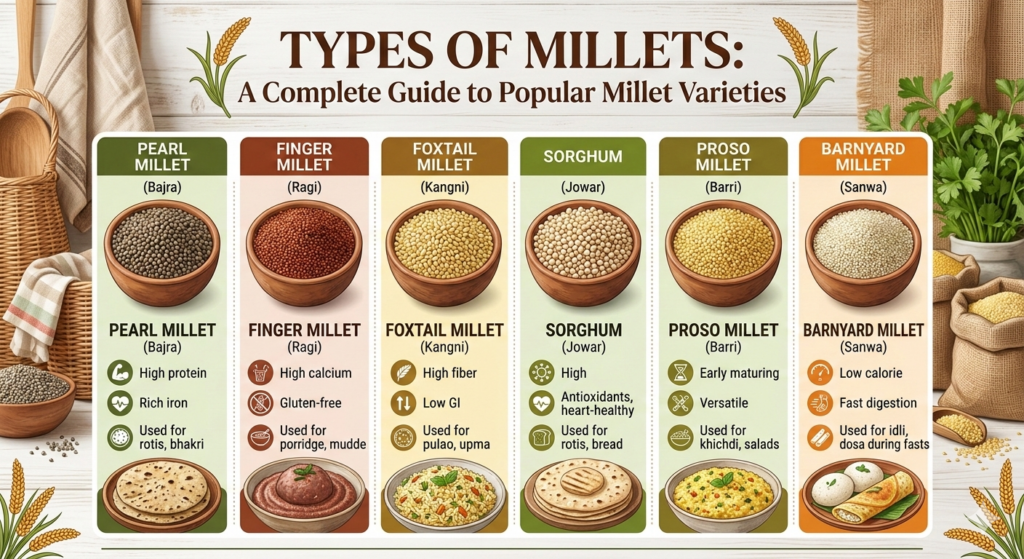
Kodo Millet is an ancient grain that has been cultivated in parts of Asia for thousands of years. Known as Kodo or Varagu in many regions of India, this millet has long been valued for its resilience, nutritional richness, and role in traditional diets.
Kodo millet is commonly grown in dryland farming systems where water availability is limited. In recent years, it has gained renewed attention as people increasingly turn to whole grains that support healthier diets and more sustainable agricultural practices.
What Is Kodo Millet?
Kodo millet belongs to the species Paspalum scrobiculatum. The grain is small and light brown to grey in colour and is typically harvested from hardy plants that can thrive in poor soils and semi-arid environments.
Traditionally cultivated in parts of India and Southeast Asia, kodo millet has been a staple food in rural communities for generations. Because of its adaptability and minimal water requirements, it has remained an important crop in regions where other grains may not grow easily.
Nutritional Profile of Kodo Millet
Kodo millet is considered a nutrient-rich whole grain and contains several important nutrients that support overall health.
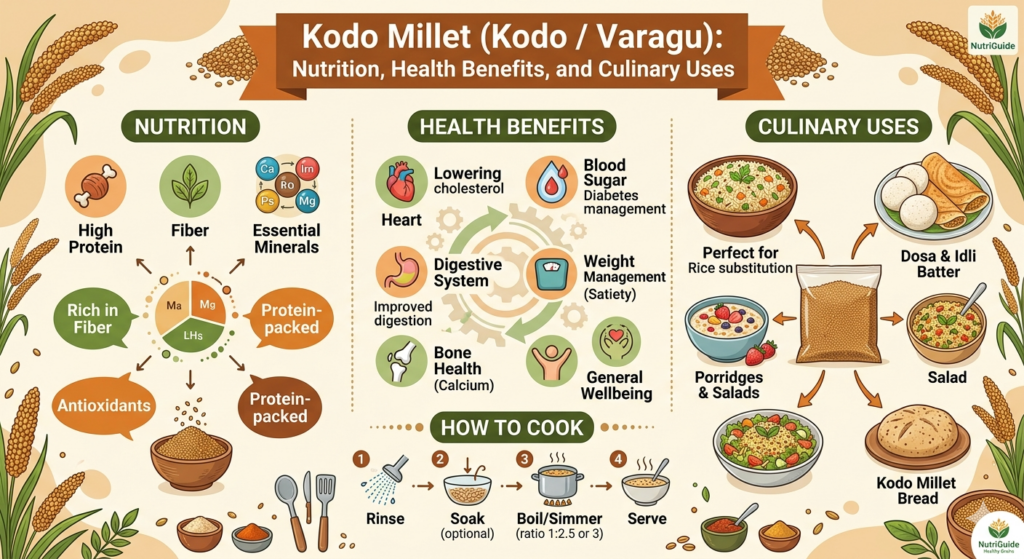
Key nutrients found in kodo millet include:
- Dietary fiber: Supports digestion and gut health
- Protein: Helps maintain muscle and tissue health
- Iron: Important for healthy blood circulation
- Magnesium and phosphorus: Support bone health and metabolism
- Antioxidants: Help protect cells from oxidative stress
Like most millets, kodo millet is naturally gluten-free, making it suitable for individuals who avoid gluten in their diets.
Health Benefits of Kodo Millet
Regular consumption of kodo millet may offer several health benefits.
Supports Digestive Health
The high fiber content in kodo millet helps promote healthy digestion and supports gut function.
Helps Manage Blood Sugar Levels
As a whole grain with complex carbohydrates, kodo millet digests slowly and may help maintain stable blood sugar levels for individuals managing conditions such as Type 2 Diabetes.
Supports Heart Health
The combination of fiber and essential minerals may contribute to maintaining healthy cholesterol levels and cardiovascular function.
Provides Sustained Energy
Kodo millet contains complex carbohydrates that release energy gradually, helping support consistent energy levels throughout the day.
Culinary Uses of Kodo Millet
Kodo millet is a versatile ingredient that can be used in many traditional and modern recipes. It can be cooked whole, used as a substitute for rice, or ground into flour.
Common culinary uses include:
- Millet-based rice dishes such as pulao
- Savory porridges and breakfast bowls
- Traditional dishes such as upma
- Flour for breads and baked goods
Its mild taste allows it to blend well with vegetables, spices, and other ingredients.
Kodo Millet in Sustainable Agriculture
Kodo millet plays an important role in sustainable farming because it requires relatively little water and can grow in marginal soils. Its resilience makes it a suitable crop for farmers in drought-prone regions and areas with unpredictable rainfall.
Recognizing the importance of millets for global food security and sustainable agriculture, the United Nations designated International Year of Millets 2023 to raise awareness about these nutritious grains.
The Growing Popularity of Kodo Millet
With increasing interest in traditional grains and nutrient-rich foods, kodo millet is gradually returning to modern kitchens. Its combination of nutritional value, adaptability in farming, and versatility in cooking makes it a valuable grain for both traditional cuisines and contemporary healthy diets.