
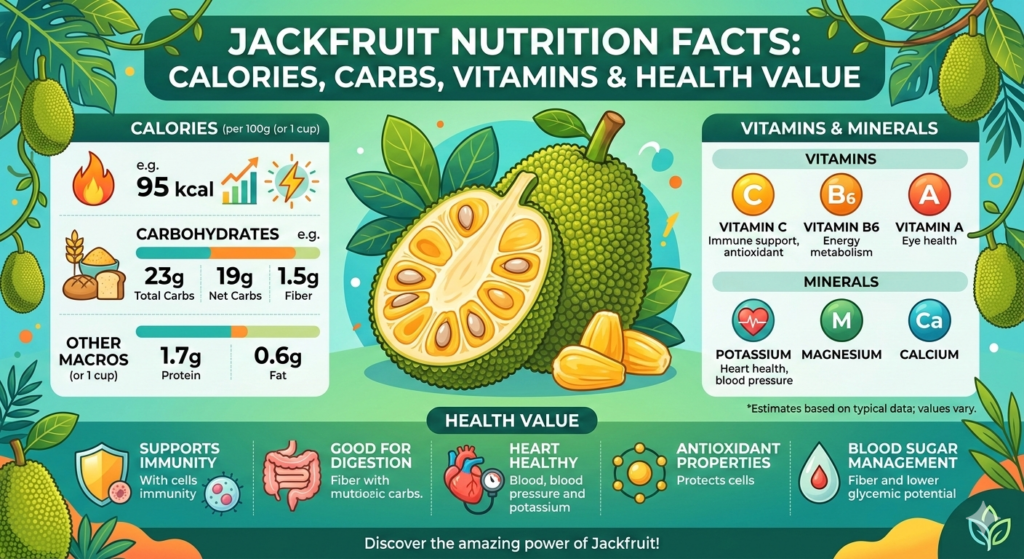
Jackfruit is one of the most nutrient-dense tropical fruits available today. Known for its large size and versatility, it provides natural energy, essential vitamins, minerals, and plant compounds that support overall health.
Whether you eat it ripe and sweet or unripe and savory, understanding jackfruit’s nutritional value helps you make smarter dietary choices.
How Many Calories Are in Jackfruit?
Ripe raw jackfruit contains approximately:
- 95 calories per 100 grams
- Around 150–160 calories per cup
It is naturally low in fat and completely cholesterol-free.
Unripe jackfruit contains slightly fewer calories because it has lower natural sugar content.
Macronutrients in Jackfruit
Carbohydrates
Jackfruit is primarily a carbohydrate-rich fruit. Per 100 grams, it contains around 23 grams of carbohydrates.
Most of these carbs come from natural sugars in ripe jackfruit. Unripe jackfruit contains more resistant starch and less sugar, making it less sweet.
Because of its carbohydrate content, jackfruit provides quick, natural energy.
Fiber
Jackfruit contains about 1.5 to 3 grams of fiber per 100 grams.
Fiber helps:
- Support digestion
- Promote gut health
- Improve bowel regularity
- Increase fullness
Although not extremely high in fiber compared to legumes, jackfruit contributes meaningfully to daily intake when eaten in balanced portions.
Protein
Jackfruit provides about 1.7 grams of protein per 100 grams.
Important clarification:
While jackfruit is widely used as a meat substitute due to its texture, it is not a high-protein food. It should be paired with protein-rich foods like beans, lentils, tofu, or chickpeas for balanced nutrition.
Fat
Jackfruit is naturally very low in fat, containing less than 1 gram per 100 grams. It is a heart-friendly fruit when consumed in moderation.
Vitamins Found in Jackfruit
Vitamin C
Jackfruit provides roughly 13–15% of the recommended daily intake of vitamin C per 100 grams.
Vitamin C helps:
- Strengthen the immune system
- Support skin health
- Act as an antioxidant
Vitamin A (Beta-Carotene)
Jackfruit contains beta-carotene, which the body converts into vitamin A. This supports:
- Eye health
- Skin health
- Immune function
B-Complex Vitamins
Jackfruit contains small amounts of several B vitamins, including:
- Vitamin B6
- Niacin
- Riboflavin
- Folate
These vitamins assist in energy metabolism and nerve function.
Minerals in Jackfruit
Potassium
Jackfruit contains approximately 448 mg of potassium per 100 grams.
Potassium supports:
- Heart health
- Blood pressure regulation
- Muscle function
- Fluid balance
Magnesium
Magnesium in jackfruit supports:
- Bone health
- Muscle relaxation
- Nervous system balance
Iron
Jackfruit contains small amounts of iron, contributing modestly to daily requirements.
Antioxidants and Plant Compounds
Jackfruit contains several beneficial plant compounds such as:
- Flavonoids
- Carotenoids
- Phytonutrients
These compounds help fight oxidative stress in the body and support long-term health.
Ripe vs Unripe Jackfruit: Nutritional Difference
Ripe jackfruit:
- Higher in natural sugars
- Sweeter taste
- Slightly higher calorie content
Unripe jackfruit:
- Lower in sugar
- Higher in resistant starch
- Often preferred for savory cooking
Because unripe jackfruit has lower sugar content, some individuals managing blood sugar may prefer it over the ripe variety.
Jackfruit Seeds Nutrition
Jackfruit seeds are edible and nutritious.
When boiled or roasted, they provide:
- Complex carbohydrates
- Moderate plant protein
- Iron
- Potassium
- Resistant starch
Seeds are commonly eaten in South Asian cuisines.
Is Jackfruit Good for Weight Loss?
Jackfruit can fit into a weight management plan when:
- Portion sizes are controlled
- It replaces processed snacks
- It is part of a balanced diet
However, ripe jackfruit contains natural sugars, so moderation is key.
Is Jackfruit Suitable for Diabetics?
Unripe jackfruit may be a better option than ripe jackfruit due to its lower sugar content.
Individuals with diabetes should always monitor blood glucose levels and consult a healthcare professional before making dietary changes.
How Much Jackfruit Should You Eat?
A reasonable serving size is:
- One cup of ripe jackfruit (around 150 grams)
OR
- One cup of cooked unripe jackfruit
This helps you enjoy the nutritional benefits without consuming excess natural sugar.
Jackfruit provides:
- Natural carbohydrates for energy
- Vitamin C for immunity
- Potassium for heart health
- Antioxidants for cellular protection
- Moderate fiber for digestion
While not a protein powerhouse, it is a valuable addition to balanced diets and plant-based meals.