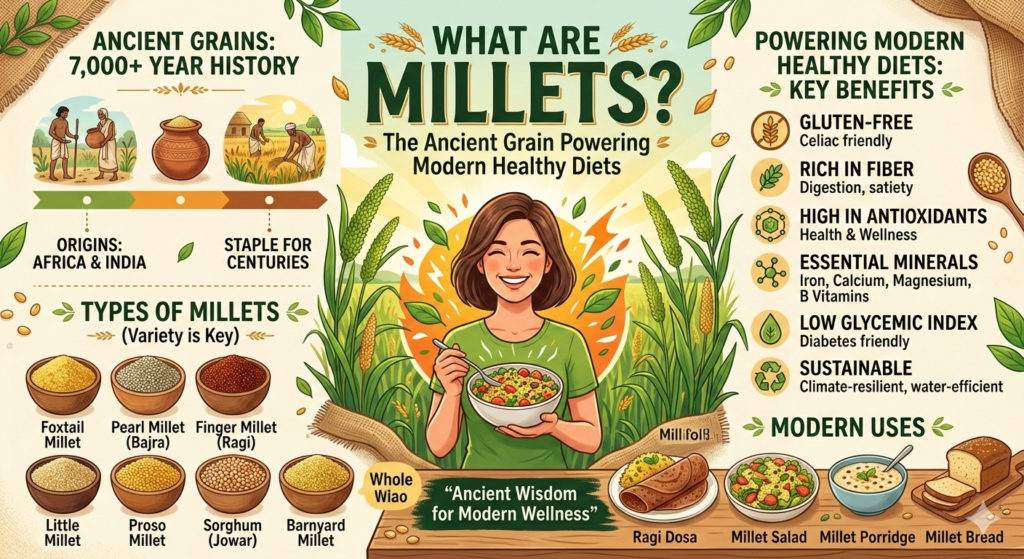
In an era where processed foods and refined grains dominate 70% of our plates, a group of “forgotten” ancient grains is making a massive comeback.
A recent landmark study published in the journal Frontiers in Sustainable Food Systems has provided scientific backing for what traditional cultures have known for centuries: Regularly eating millets can significantly lower blood sugar and help manage type 2 diabetes.
Here is everything you need to know about the research and why you should consider swapping your white rice for these nutritional powerhouses.
The Global Health Crisis
With the world’s diabetic population projected to reach 783 million by 2045, the search for sustainable, diet-based solutions has never been more urgent. While exercise and medication are vital, our global reliance on “The Big Three” rice, wheat, and maize has led to a lack of dietary diversity that fuels obesity and blood sugar spikes.
What the Research Says
A team of international researchers conducted a systematic review and meta-analysis of studies to see exactly how millets stack up against traditional staples. The results were clear:
- Significant Drop in Fasting Blood Sugar
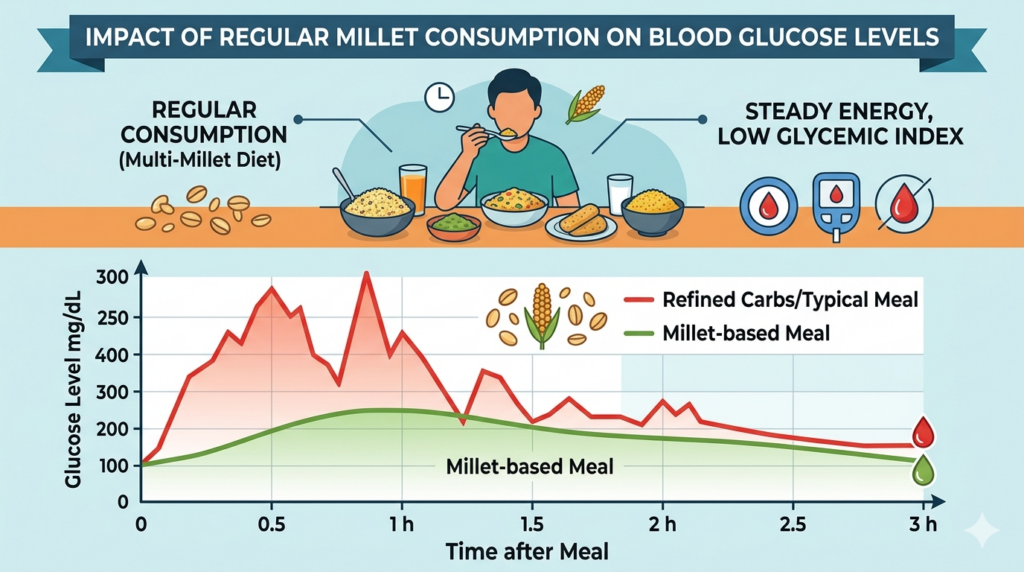
The study found that participants who consumed millets regularly saw an average 11.8% reduction in Fasting Blood Sugar (FBS) levels. Unlike refined grains, millets digest slowly, preventing the “sugar rush” often felt after a meal.
- Post-Meal Spikes are Tamed
One of the biggest challenges for diabetics is managing Post-Prandial Blood Sugar (PPBS)—the spike that happens after eating. The research showed a 15.1% reduction in these spikes for millet consumers compared to those eating white rice or refined wheat.
- Better Than Major Staples
When compared to groups eating standard rice or wheat diets, the millet-consuming groups showed much more consistent improvement. This is largely due to the low Glycemic Index (GI) of millets, which ensures a slow, steady release of energy into the bloodstream.
Why are Millets So Powerful?
Millets aren’t just “good for diabetes” they are nutritional “super-grains.”
- High Fiber: They contain significantly more fiber than white rice, aiding digestion and satiety.
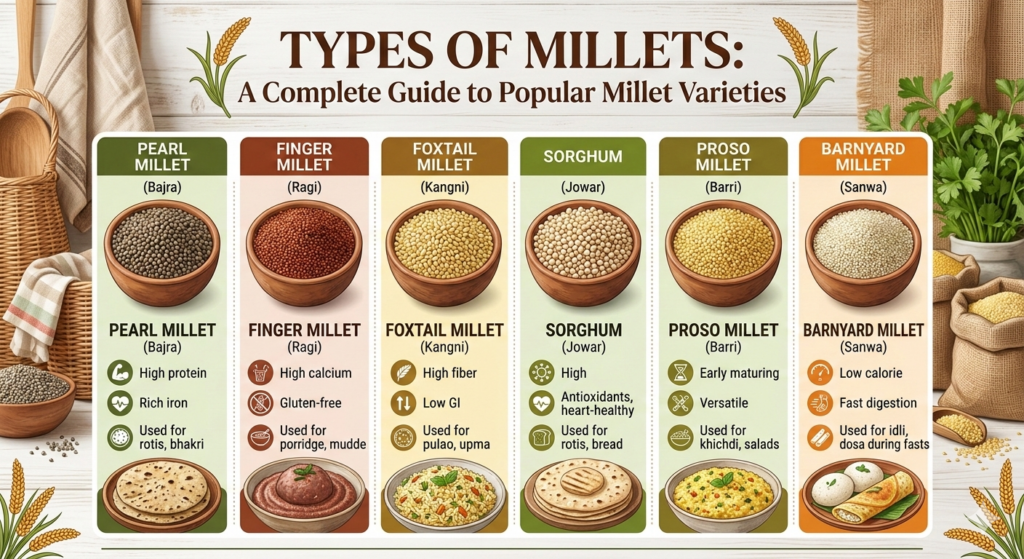
- Mineral Dense: Finger millet (Ragi) is exceptionally high in calcium, while other varieties are rich in iron and magnesium.
- Sustainable: Beyond personal health, millets are “smart foods.” They require very little water and can grow in poor soil, making them a climate-resilient choice for the planet.
How to Get Started: Swapping Your Staples
You don’t have to overhaul your entire diet overnight. The study suggests that regularity is key. Try these simple swaps:
- Breakfast: Swap your morning oatmeal or cereal for a millet porridge or ragi malt.
- Lunch: Replace white rice with Little Millet or Foxtail Millet. They have a similar texture and soak up sauces beautifully.
- Dinner: Use millet flour (like Bajra or Sorghum) to make flatbreads, or use whole millet in salads instead of couscous or quinoa.
The science is in: Millets are a powerful, natural tool for managing blood glucose and improving long-term health. By diversifying our plates with these ancient grains, we can take a major step toward reversing the global diabetes trend while supporting a more sustainable food system.