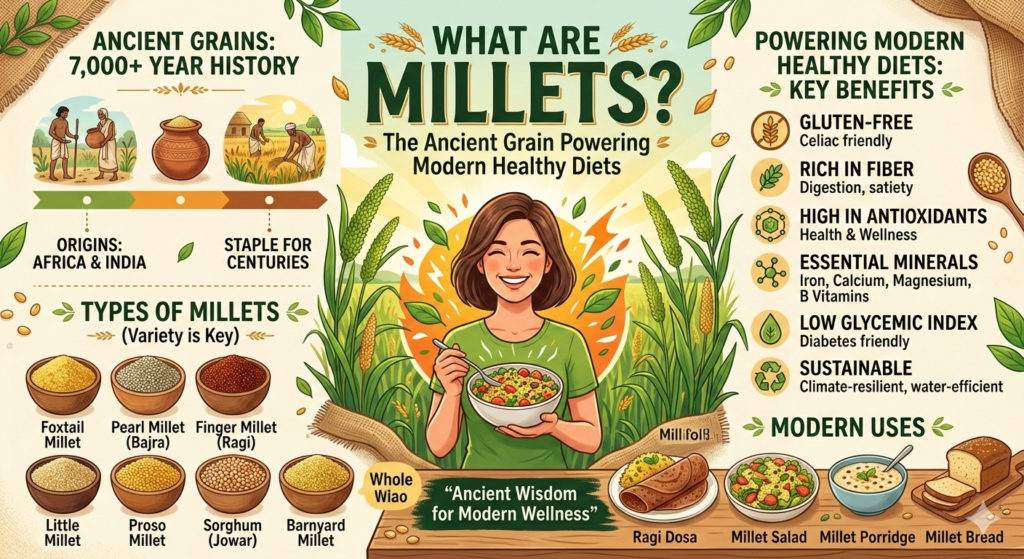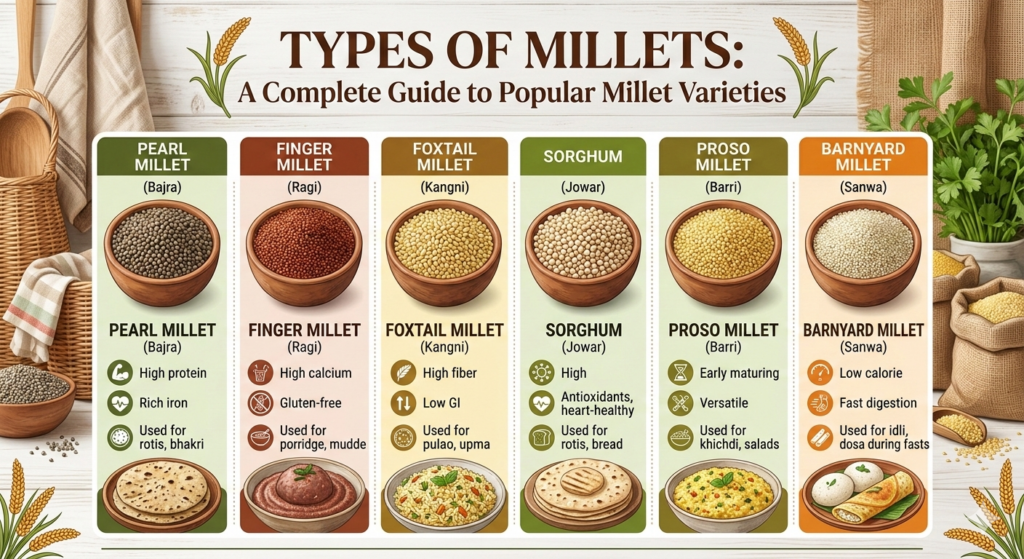
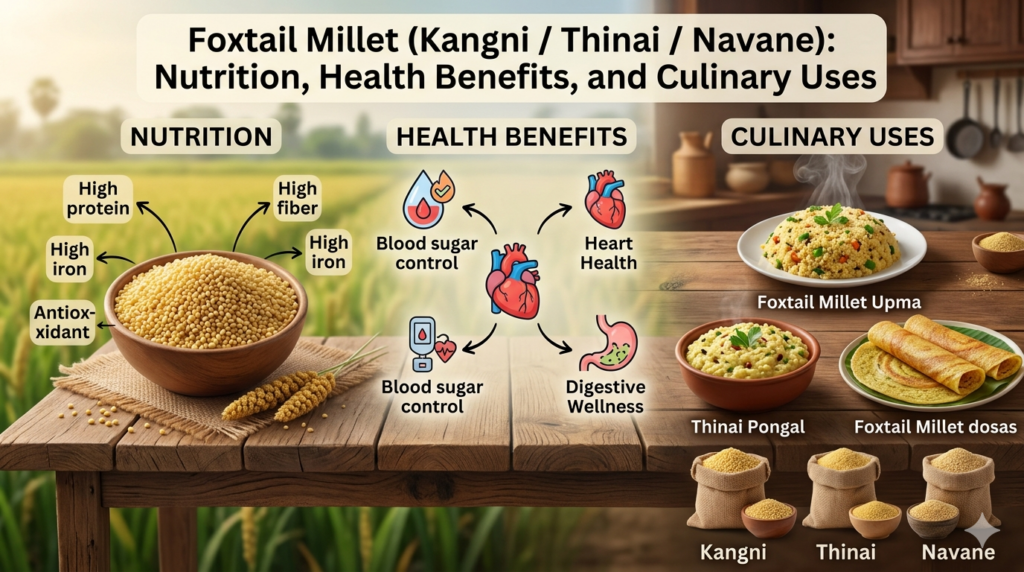
Foxtail Millet is one of the oldest cultivated millet varieties in the world. Known by different regional names such as Kangni, Thinai, and Navane, this ancient grain has been part of traditional diets across Asia for thousands of years. In many regions of India, foxtail millet has long been valued as a nutritious staple food, especially in areas with limited rainfall.
What Is Foxtail Millet?
Foxtail millet belongs to the species Setaria italica and is recognized by its small yellowish grains and its distinctive brush-like seed head, which resembles a fox’s tail. The crop is highly adaptable and can grow in dry and semi-arid climates, making it an important grain for regions where water availability is limited.
Historically, foxtail millet was widely cultivated in ancient China and later spread across Asia and Europe. It remains a significant crop in several parts of India and East Asia today.
Nutritional Profile of Foxtail Millet
Foxtail millet is considered a nutrient-rich whole grain that provides a variety of essential nutrients important for overall health.
Key nutrients found in foxtail millet include:
- Protein: Supports muscle growth and tissue repair
- Dietary fiber: Promotes digestive health
- Iron: Helps maintain healthy red blood cells
- Magnesium: Supports muscle and nerve function
- B vitamins: Aid in energy metabolism
Like many other millets, foxtail millet is naturally gluten-free, making it suitable for people who avoid gluten-containing grains.
Health Benefits of Foxtail Millet
Regular consumption of foxtail millet may contribute to several health benefits.
Supports Blood Sugar Management
Foxtail millet has a relatively low glycemic index compared to refined grains. This can help maintain stable blood sugar levels and may benefit individuals managing conditions such as Type 2 Diabetes.
Promotes Digestive Health
The dietary fiber content helps support healthy digestion and may improve gut function.
Supports Heart Health
Minerals such as magnesium, along with fiber, can contribute to maintaining healthy cardiovascular function.
Provides Sustained Energy
The complex carbohydrates in foxtail millet release energy gradually, helping maintain energy levels throughout the day.
Culinary Uses of Foxtail Millet
Foxtail millet is a versatile grain that can be used in a wide range of traditional and modern recipes. It can be cooked similarly to rice or ground into flour for baking and cooking.
Common culinary uses include:
- Millet porridge for breakfast
- Upma and pulao made with millet instead of rice
- Salads and grain bowls
- Flour for breads, pancakes, and baked goods
Its mild flavour allows it to pair well with both savory and sweet ingredients.
Foxtail Millet in Sustainable Agriculture
Foxtail millet is an important crop for sustainable agriculture because it requires relatively little water and can grow in poor soil conditions. Its short growing season and resilience to drought make it suitable for farmers in dryland regions.
The global importance of millets, including foxtail millet, has gained increased recognition in recent years. To promote their role in sustainable food systems, the United Nations declared International Year of Millets 2023.v
The Growing Role of Foxtail Millet in Modern Diets
With growing interest in whole grains and nutrient-dense foods, foxtail millet is gradually returning to modern kitchens. Its nutritional benefits, versatility in cooking, and environmental advantages make it a valuable grain for both traditional diets and contemporary healthy eating patterns.