As we navigate our 30s and 40s, we often focus on career growth and family life, yet a silent change is occurring within our bodies. For many women, the premenopausal years are a critical window for bone health a time when bone density can begin to slip unnoticed.
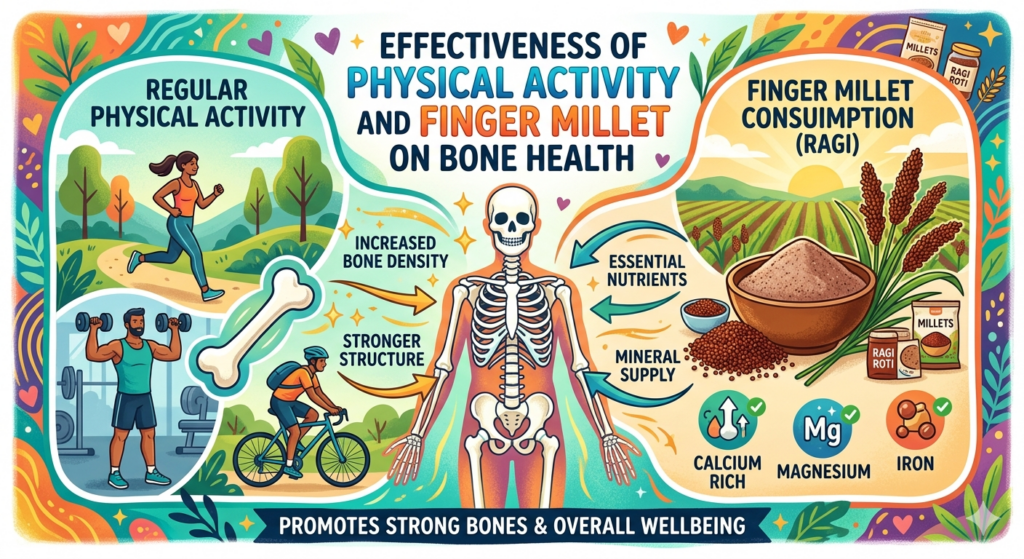
Recent research highlights a natural, accessible, and highly effective way to combat this: the combination of Finger Millet (Ragi) and targeted physical activity.
The Hidden Challenge of Bone Loss
Osteoporosis and osteopenia (the precursor to osteoporosis) are often called “silent” conditions because they progress without symptoms until a fracture occurs. Studies show that a significant percentage of premenopausal women already exhibit low bone mineral density (BMD) and calcium deficiency.
As estrogen levels begin to fluctuate during the premenopausal stage, the body’s ability to maintain bone mass is challenged. However, this is also the most effective time to intervene.
Why Finger Millet is a “Super Cereal” for Bones
Finger millet, commonly known as Ragi, has emerged as a nutritional powerhouse for bone preservation. Here is why it stands out:
- Calcium Champion: Finger millet contains 5 to 30 times more calcium than other cereals like rice, wheat, or maize.
- Essential Minerals: It is naturally rich in phosphorus and magnesium, both of which are critical for the structural integrity of the skeletal system.
- High Bioavailability: When consumed regularly, the calcium in ragi is effectively absorbed, leading to measurable increases in serum calcium levels.
- Holistic Health: Beyond bones, ragi is gluten-free, high in fiber, and rich in essential amino acids, making it an excellent choice for overall metabolic health.
The Role of Physical Activity
Nutrition alone is only half the battle. The skeletal system responds to mechanical stress when we move, our bones are signaled to become denser and stronger.
The most effective routine includes a mix of:
- Weight-Bearing Exercises: Activities like brisk walking or jogging.
- Strength Training: Targeting the spine, hips, and shoulders to build muscle and bone resistance.
- Flexibility & Balance: Improving range of motion to prevent falls and injuries.
The 3-Month Transformation: Research Insights
A study involving premenopausal women found that a simple 12-week intervention led to significant improvements in bone health markers. The participants followed a straightforward protocol:
- Ragi Supplementation: Consuming finger millet-based food three times per week.
- Regular Movement: Engaging in strengthening and resistance exercises five days per week.
- The Results: At the end of the three months, participants showed significant increases in serum calcium and improved BMD T-scores, effectively reversing early signs of bone loss.
Practical Tips to Get Started
You don’t need an expensive gym membership or rare supplements to protect your bones. You can start today with these simple steps:
- Swap Your Grains: Incorporate ragi flour into your breakfast as porridge, pancakes, or rotis.
- Mindful Snacking: Try nutrient-dense ragi snacks made with natural sweeteners like jaggery, which also adds a boost of iron.
- Stay Consistent: Aim for at least 30 minutes of movement most days of the week. Focus on functional movements that strengthen your core and lower body.
- Early Screening: If you are in your 30s or 40s, consider a baseline bone density test to understand your current health status.
Bone health is a lifelong journey, but the premenopausal years are the most strategic time to act. By combining the ancient wisdom of calcium-rich millets with the modern necessity of physical movement, you can build a stronger foundation for the years to come.
Invest in your bones today, they are the framework for your future.