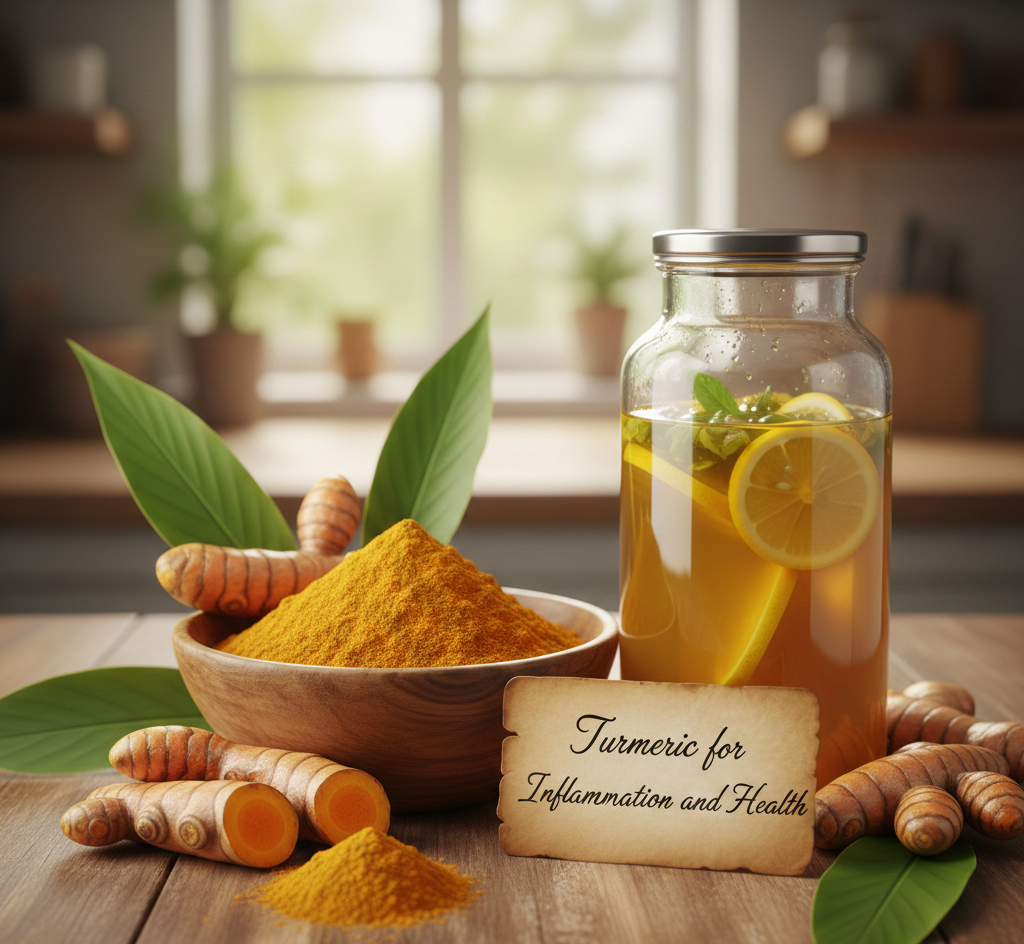
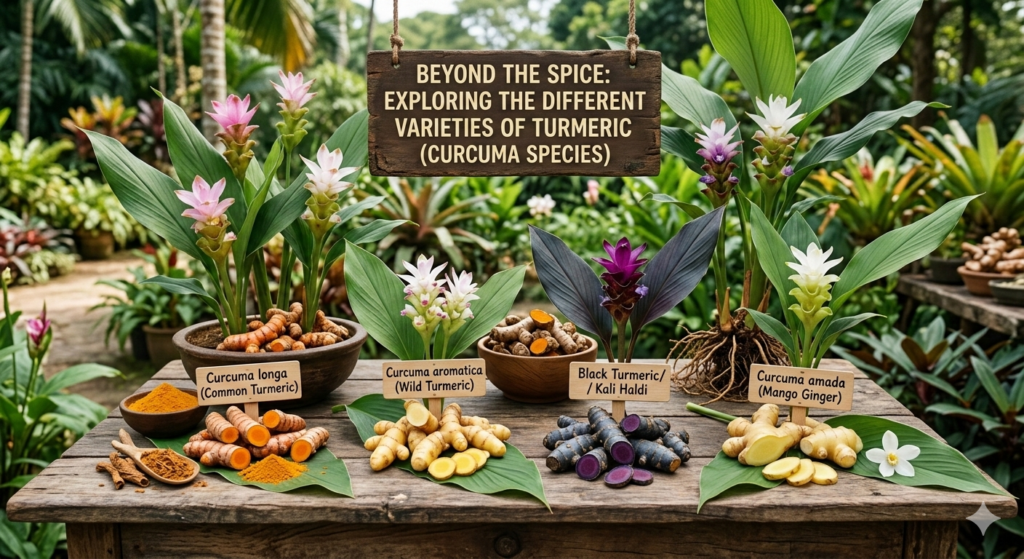
When most people think of turmeric, they picture the bright yellow powder used in curries and golden milk. But turmeric is not a single uniform plant. It belongs to a broader botanical genus known as Curcuma a diverse group of rhizomatous plants within the ginger family.
Across South and Southeast Asia, different turmeric species evolved with distinct colours, aromas, chemical compositions, and uses. Some are culinary staples. Others are reserved for cosmetics, tribal medicine, or ritual practice.
Understanding these differences is essential because not all turmeric is meant to be eaten.
Curcuma longa
The Culinary & Medicinal Mainstay
This is the turmeric most widely cultivated and consumed globally.
Key Characteristics:
- Deep orange-yellow rhizome
- Mildly bitter, earthy flavor
- High curcumin concentration
- Primary commercial export species
Traditional Uses:
- Foundational spice in Indian, Sri Lankan, and Southeast Asian cuisine
- Core herb in Ayurveda for digestion and inflammation support
- Used in immunity drinks like golden milk
- Natural food colouring agent
Modern Relevance:
Most curcumin supplements are derived from Curcuma longa. It is the species studied extensively in clinical research for anti-inflammatory and antioxidant properties.
If your goal is cooking or internal health support, this is the turmeric you want.
Curcuma caesia
The Rare & Mystical Root
Black turmeric stands apart visually and chemically.
Key Characteristics:
- Dark bluish-black interior
- Strong camphor-like aroma
- Lower curcumin levels than C. longa
- Considered rare in cultivation
Traditional Uses:
- Used in tribal medicine in parts of India
- Associated with ritual and spiritual practices
- Applied in poultices rather than cooking
Unlike culinary turmeric, black turmeric is rarely consumed as a food ingredient. Its strong aroma and distinct phytochemical profile make it more suited to external or ceremonial uses.
Because of overharvesting and niche demand, sustainable sourcing is important with this variety.
Curcuma aromatica
Kasturi Manjal: The Cosmetic Favourite
Wild turmeric, often called Kasturi Manjal in South India, is prized for skincare rather than cooking.
Key Characteristics:
- Pale yellow interior
- Pleasant fragrance
- Lower staining effect on skin
- Not typically used as a food spice
Traditional Uses:
- Bridal “ubtan” ceremonies
- Anti-acne and skin-brightening pastes
- Baby skincare in traditional households
Wild turmeric is especially valued in cosmetic applications because it is believed to be gentler on skin and less likely to leave persistent stains compared to Curcuma longa.
If you’re preparing DIY face masks, this is usually the preferred variety.
Curcuma zedoaria
The Bitter Digestive Root
White turmeric, also known as zedoary, is more common in Southeast Asia than in Indian kitchens.
Key Characteristics:
- Creamy white flesh
- Sharp, bitter taste
- Aromatic profile closer to ginger
- Minimal culinary use in Indian cuisine
Traditional Uses:
- Used in Indonesian and Thai herbal preparations
- Employed in digestive tonics
- Incorporated into traditional medicinal powders
Its bitterness limits widespread culinary adoption, but its aromatic complexity gives it value in herbal traditions.
Why These Differences Matter
While these plants share a genus, they differ significantly in:
- Chemical composition
- Curcumin content
- Flavor intensity
- Cosmetic vs culinary suitability
- Ritual and regional importance
Using the wrong variety can lead to poor results whether in cooking, skincare, or herbal application.
For example:
- Cooking with wild turmeric may alter flavour.
- Applying culinary turmeric to skin may cause stronger staining.
- Consuming black turmeric without guidance may not deliver expected benefits.
A Botanical Family with Cultural Layers
The diversity within the Curcuma genus reflects how plants adapt to climate, soil, and culture. In tropical ecosystems, variations evolved naturally. Communities then assigned uses based on sensory qualities, observed effects, and ritual meaning.
Today, global demand often collapses these distinctions into a single word: turmeric. But historically and botanically, that simplification misses the richness of the plant family.
Understanding these varieties reconnects the consumer to the agricultural and cultural intelligence behind traditional plant use.