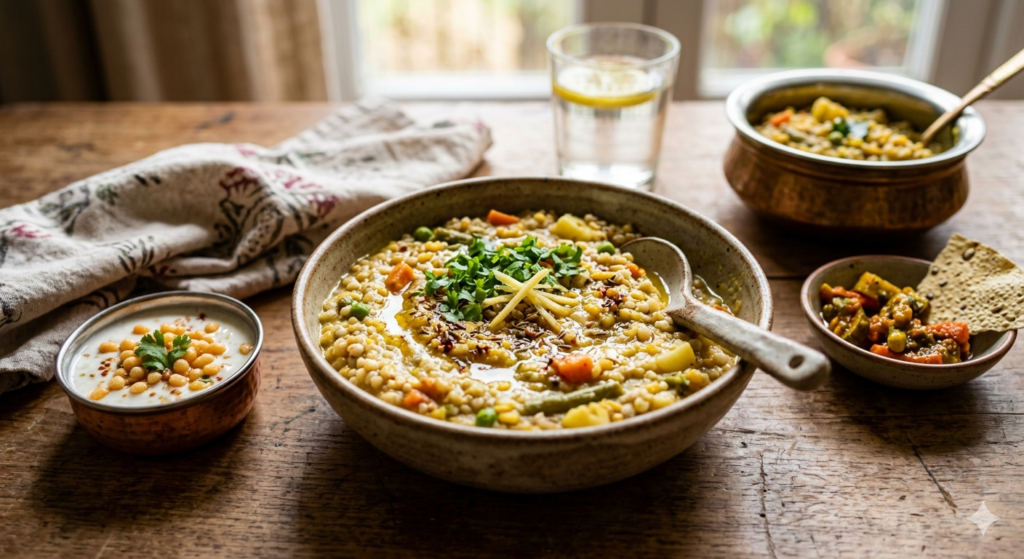
Quick Recipe: Sorghum (Jowar) Khichdi 10
- Soak and grind: Soak jowar in warm water for 2 hours, then grind coarsely.
- Make paste: Blend coconut, garlic, green chilies, and coriander into a spice paste.
- Combine grains: Mix ground jowar with toor dal and moong dal for protein.
- Liquid ratio: Use 5 parts liquid (water and buttermilk) for 1 part grain.
- Cook: Pressure cook the grains, dal, and spice paste until soft and creamy.
- Temper: Sauté cumin seeds and curry leaves in ghee and pour over the khichdi.
- Serve: Enjoy hot as a gut-friendly, slow-release energy meal.
In the search for a wholesome, gut-friendly alternative to traditional rice-based meals, Sorghum Khichdi (also known as Jowar Khichdi) stands out as a nutritional powerhouse. This ancient grain, a staple in many traditional diets, is being rediscovered for its incredible ability to provide sustained energy while being remarkably easy on the digestive system.
As demonstrated by Chef Varun Inamdar, the secret to a perfect Sorghum Khichdi lies in a unique preparation method that unlocks the grain’s full potential.
The Secret to Enhanced Digestibility
Whole sorghum can sometimes be dense, but this recipe uses a brilliant culinary hack to make it light and airy. By soaking the dried jowar in warm water for at least two hours until it “blooms” and then coarsely grinding it, you break down the complex structures. This process significantly improves the digestibility factor, allowing your body to absorb the nutrients more efficiently.
A Flavorful Spice Synergy
A great khichdi is nothing without its aromatic base. This version uses a freshly crushed spice paste made from:
- Fresh Coconut and Garlic: For a rich, savory depth.
- Curry Leaves and Green Chilies: Adding a classic coastal warmth and a hint of heat.
- Fresh Coriander: To bring a bright, herbal finish to the grains.
The “1:5” Creamy Liquid Ratio
Texture is everything in a comforting one-pot meal. To achieve a consistency that is neither too dry nor too watery, Chef Varun recommends a 1:5 ratio of grain to liquid.
The Pro-Tip: Instead of using only water, substitute one part with buttermilk. The acidity of the buttermilk adds a subtle tang and a creamy mouthfeel that elevates the earthy flavor of the sorghum.
A Complete Plant-Based Protein Profile
When you combine sorghum with lentils like pigeon pea (Toor Dal) and moong dal, you create a complete protein profile. This makes the khichdi an ideal muscle-repairing meal for vegetarians and those looking to reduce their meat consumption without sacrificing strength or satiety.
Health Benefits at a Glance
Fiber-Rich: Supports a healthy gut and promotes long-lasting fullness.
Naturally Gluten-Free: A safe and delicious staple for those with gluten sensitivities or Celiac disease.
Slow-Release Energy: The complex carbohydrates in sorghum provide a steady stream of energy, preventing the “sugar crash” often associated with white rice.