
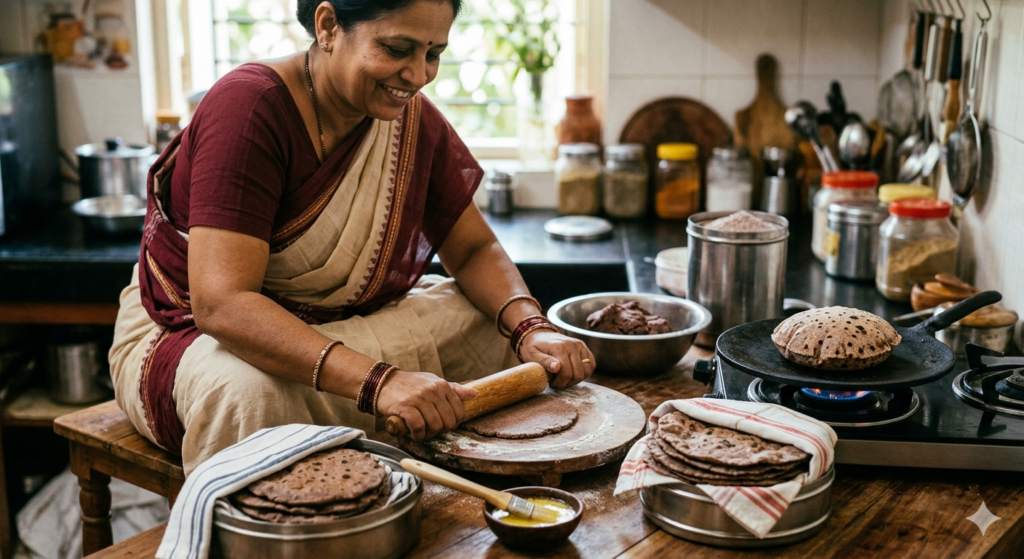
Quick Recipe: Soft & Puffy Ragi Roti 5
- Boil the water: Bring 1 cup of water with a pinch of salt to a rolling boil.
- Add the flour: Turn heat to low, add 1 cup of ragi flour, and let sit for 10 seconds before mixing.
- Steam and rest: Turn off the heat, mix until the water is absorbed, and cover with a lid to steam for 3 minutes.
- The warm knead: Transfer the warm dough to a plate; add 1/2 tsp ghee or oil and knead vigorously until smooth and supple.
- Roll it thin: Knead each individual dough ball again briefly before rolling it out on a dusted surface to prevent cracked edges.
- The perfect puff: Cook on a hot tawa for 20 seconds, flip, and gently press the edges with a cloth until it puffs up.
- Store and serve: Wrap in a kitchen towel to keep soft; serve with dal, curry, or yogurt.
If you’ve ever tried making Ragi Roti (Finger Millet flatbread) and ended up with a dry, cracked, or hard result, you aren’t alone. Ragi is naturally gluten-free, which means it lacks the “elasticity” of wheat, making it notoriously difficult to roll.
However, with the right technique, you can create soft, pliable, and puffing Ragi rotis that stay fresh for hours. Whether you are managing diabetes, looking for weight loss meals, or simply want to boost your calcium intake, this 100% ragi recipe is a nutritional powerhouse.
The Nutritional Power of Finger Millet
- Ragi is one of the few natural sources of Vitamin D and is exceptionally high in calcium and iron.
- Weight Management: High fiber content keeps you satiated for longer.
- Sprouted Advantage: Using sprouted ragi flour increases Vitamin C levels, which aids in the easy absorption of iron into your bloodstream.
- Essential Fats: Because Vitamin D is fat-soluble, pairing ragi with a healthy fat like Desi Ghee or wood-pressed oil is crucial for your body to actually absorb its nutrients.
Ingredients
- Sprouted Ragi Flour: 1 cup
- Water: 1 cup (The 1:1 ratio is the secret to success!)
- Salt: A pinch of Pink Himalayan salt or sea salt
- Healthy Fat: 1/2 tsp Desi Ghee or wood-pressed oil
The Step-by-Step Guide to Perfect Ragi Roti
- The Boiling Method (Crucial)
The secret to soft gluten-free roti is “pre-gelatinizing” the starch.
- Bring 1 cup of water to a rolling boil in a saucepan with a pinch of salt.
- Once boiling, turn the flame to the lowest setting and add 1 cup of ragi flour.
- Do not stir immediately; let it sit for 10 seconds.
- Turn off the heat and use the back of a wooden spoon to mix until the flour absorbs the water. Cover with a lid and let it steam for 3 minutes.
- The Warm Knead
Transfer the dough to a plate while it is still warm. Wet your hands slightly and knead the dough vigorously. Add the ghee or oil at this stage. Continue kneading until the dough is smooth, supple, and no longer sticks to your hands or the plate.
- The “Anti-Crack” Secret
Before rolling out each individual dough ball, knead that specific ball again on your work surface for a few seconds. This extra bit of friction ensures the edges won’t crack when you use the rolling pin.
- Rolling it Thin
Dust your work surface with a little dry ragi flour. Roll the dough ball gently into a thin, even circle. If you’ve followed the boiling and kneading steps correctly, the dough will be surprisingly easy to handle almost like wheat dough!
- The Perfect Puff
Place the roti on a hot cast-iron tawa. Wait about 15–20 seconds until small bubbles appear on the surface, then flip it over. You will notice the roti start to puff up almost immediately. Use a soft cotton cloth to gently press the edges, encouraging the steam to fill the roti.
Serving Suggestions
Ragi Roti has a mild, earthy flavour that pairs beautifully with:
- Classic Dal Tadka or a spicy vegetable curry.
- Fresh Curd (Yogurt) and a dash of pickle.
- Garlic Chutney for an extra kick of flavour.
Pro-Tips for Success
Don’t let the dough cool: If the dough becomes cold, it loses its pliability. Always knead and roll while it is warm.
- The Ghee Factor: Don’t skip the ghee! It’s not just for taste; it’s the “key” that unlocks the Vitamin D in the millet.
- Storage: Wrap the hot rotis in a clean kitchen towel and store them in an insulated container to keep them soft for the entire day.
Ready to upgrade your health? Give this soft Ragi Roti recipe a try for your next breakfast or dinner and experience the benefits of this ancient Indian supergrain!