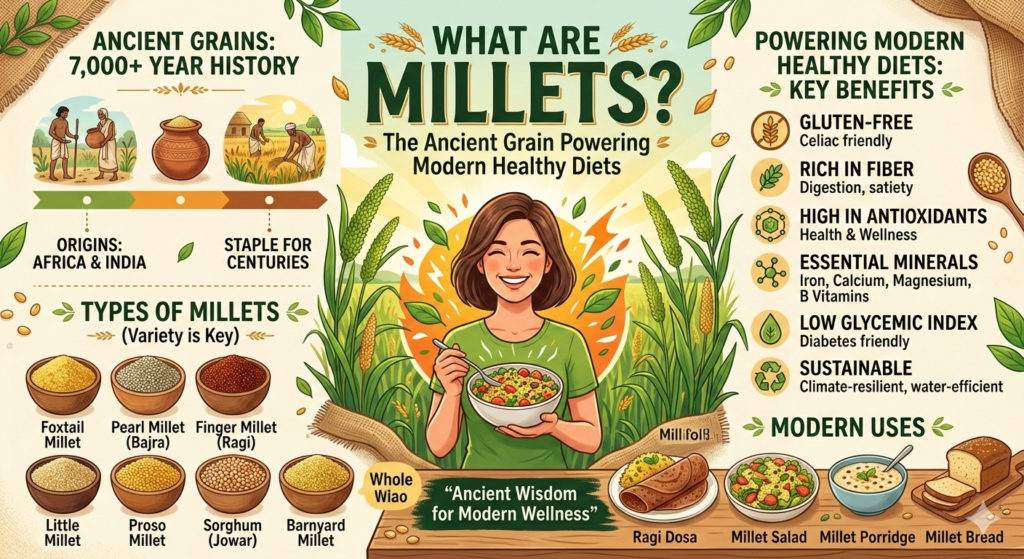
Millets are not a single grain but a group of small-seeded cereals that belong to the grass family. They have been cultivated for thousands of years in Asia and Africa and remain important crops in many dry and semi-arid regions. Known for their resilience and nutritional value, millets are increasingly gaining global recognition as healthy and sustainable alternatives to refined grains.
Several varieties of millets exist, each with unique nutritional benefits, flavours, and culinary uses. Understanding these varieties helps consumers choose the right millet for different dishes and dietary needs.
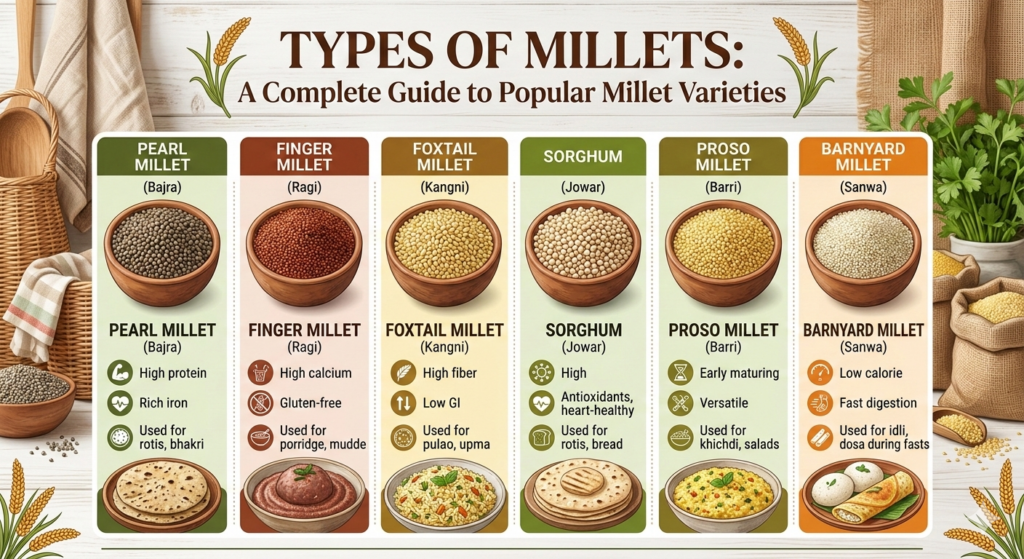
Pearl Millet
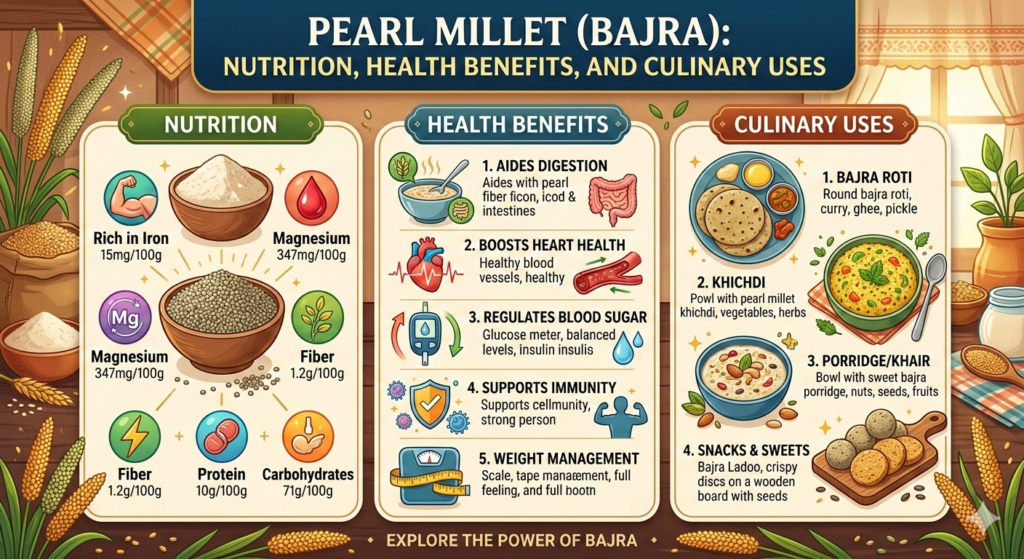
Pearl Millet, commonly known as bajra in India, is one of the most widely cultivated millet varieties. It thrives in arid climates and is a staple food in many parts of Africa and South Asia.
Pearl millet is rich in protein, fiber, and essential minerals such as iron and magnesium. It is commonly used to prepare flatbreads, porridges, and traditional dishes in regions where it is grown.
Finger Millet
Finger Millet, also called ragi, is particularly valued for its high calcium content. It is widely consumed in parts of India and East Africa.
Finger millet is often ground into flour and used to prepare porridges, pancakes, and traditional breads. Its high nutrient density makes it a popular ingredient in foods designed for children and older adults.
Foxtail Millet
Foxtail Millet is one of the oldest cultivated millets and has been grown in Asia for thousands of years. It is known for its mild flavour and versatility in cooking.
Foxtail millet is rich in dietary fiber and protein and can be used as a substitute for rice in many recipes, including grain bowls, salads, and stir-fried dishes.
Sorghum
Sorghum, known as jowar in India, is technically a cereal grain but is often grouped with millets due to its similar characteristics and uses.
Sorghum is widely grown around the world and is valued for its drought tolerance. It is used in various foods such as flatbreads, porridges, and gluten-free baked products.
Barnyard Millet
Barnyard Millet is a fast-growing crop that matures quickly and requires relatively little water. It is known for its light texture and mild taste.
Barnyard millet is often used in traditional dishes and is considered a good option for people seeking low-glycemic foods.
Little Millet
Little Millet is a small-grained millet commonly grown in India. Despite its size, it offers a strong nutritional profile, including fiber, minerals, and antioxidants.
It can be cooked in a similar way to rice and used in dishes such as pulao, upma, and porridge.
Kodo Millet
Kodo Millet is another traditional grain cultivated mainly in India. It is known for its high fiber content and potential digestive benefits.
Kodo millet is often used in traditional meals and is increasingly incorporated into modern healthy recipes.
The Diversity of Millets
Each millet variety offers unique nutritional benefits and culinary possibilities. From nutrient-dense flours to whole grains used in traditional cooking, millets provide versatile options for both home cooks and the food industry.
As awareness of sustainable agriculture and healthy diets grows, these diverse millet varieties are gaining renewed attention around the world.