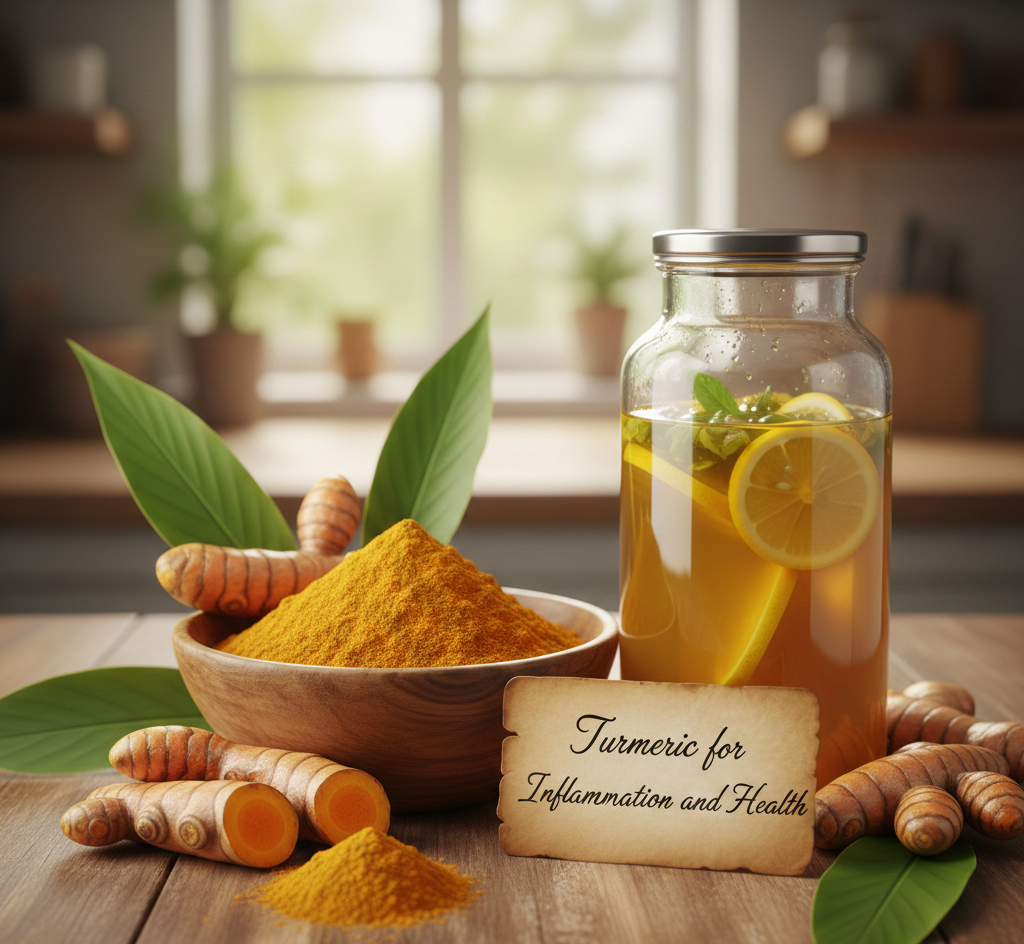
Turmeric has become one of the most widely recognized spices in the world, valued for its vibrant colour, earthy flavour, and health-supporting compounds. Derived from the rhizome of the plant Curcuma longa, turmeric is commonly available in two forms: fresh turmeric root and turmeric powder.
While both originate from the same plant, they differ in taste, nutritional composition, storage, and culinary uses. Understanding these differences can help determine which form works best for specific cooking or wellness purposes.
What Is Fresh Turmeric?
Fresh turmeric is the raw rhizome harvested directly from the plant. It closely resembles ginger in shape and texture but has a deep orange interior and a slightly bitter, earthy flavour.
Fresh turmeric contains natural moisture and a range of plant compounds, including curcuminoids and essential oils. Because it has not undergone drying or grinding, it retains a vibrant aroma and a slightly milder flavour compared with the powdered version.
Fresh turmeric is widely used in traditional cuisines and wellness practices, particularly within systems such as Ayurveda.
However, fresh turmeric is more perishable and requires refrigeration for proper storage.
What Is Turmeric Powder?
Turmeric powder is produced by boiling, drying, and grinding turmeric rhizomes into a fine golden powder. This process removes moisture and concentrates certain compounds, making the spice easier to store and transport.
Turmeric powder is the most common form used globally because it has a long shelf life and consistent flavour. It is widely used in spice blends, curries, marinades, and prepared foods.
Food and agricultural organizations such as Food and Agriculture Organization note that drying turmeric is an important step in preserving the spice for international trade.
Nutritional Differences
Both fresh and powdered turmeric contain curcumin, the compound responsible for turmeric’s distinctive colour and many of its studied benefits.
However, the drying process can slightly change the concentration of compounds:
Fresh turmeric contains more water and volatile oils, contributing to a brighter aroma and fresher taste.
Turmeric powder often contains a higher concentration of curcumin per gram because the water has been removed.
Despite these differences, both forms remain nutritionally valuable and can contribute beneficial compounds to the diet.
Flavour and Culinary Uses
The choice between fresh and powdered turmeric often depends on the dish being prepared.
Fresh turmeric provides a lighter, slightly citrusy flavour and is often grated or blended into:
- Smoothies
- Fresh juices
- Herbal drinks
- Pickles and chutneys
Turmeric powder has a stronger, more concentrated flavour and is typically used in:
- Curries and stews
- Spice blends
- Rice dishes
- Marinades
Because turmeric powder disperses evenly in liquids and sauces, it is generally more convenient for everyday cooking.
Shelf Life and Storage
Shelf life is one of the biggest differences between the two forms.
Fresh turmeric usually lasts two to three weeks in the refrigerator, while turmeric powder can remain usable for six months to a year if stored in an airtight container away from light and moisture.
This longer shelf life is one reason turmeric powder dominates global markets and household kitchens.
Convenience and Availability
Turmeric powder is easier to find in grocery stores around the world and requires no preparation before use. Fresh turmeric, on the other hand, is typically available in specialty stores, Asian markets, or during certain harvest seasons.
Preparation is another factor. Fresh turmeric needs to be peeled or grated, and it can stain surfaces and hands due to its strong pigment.
Which One Is Better?
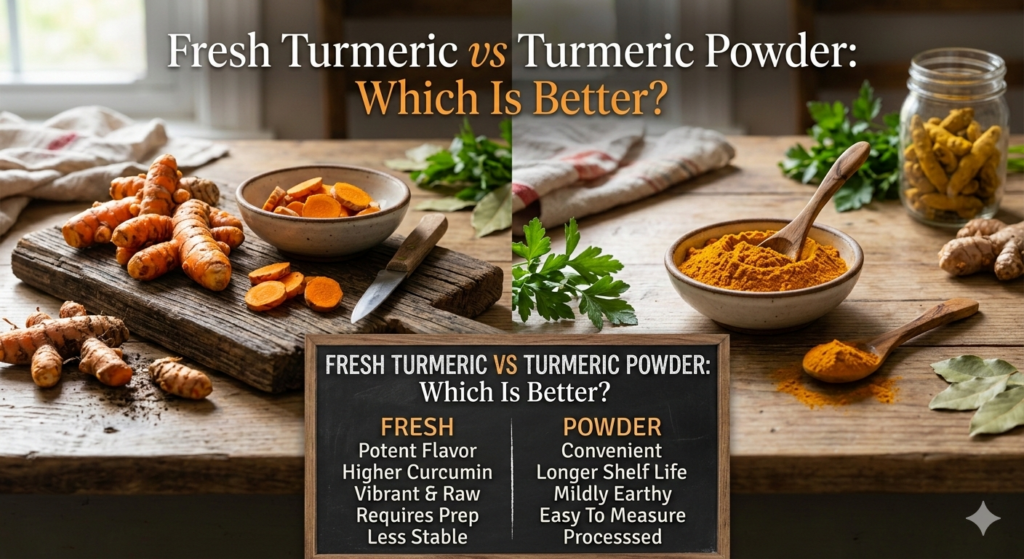
There is no universal answer to whether fresh turmeric or turmeric powder is better. Each form has its own advantages.
Fresh turmeric offers a vibrant flavour and natural aroma that works well in beverages and fresh preparations. Turmeric powder provides convenience, longer storage, and versatility in cooking.
Ultimately, both forms come from the same remarkable plant and deliver similar core compounds. The best choice depends on how the spice will be used, how long it needs to be stored, and personal culinary preference.
By incorporating either fresh or powdered turmeric into everyday meals, cooks can continue to benefit from the distinctive qualities of this ancient and globally cherished spice.