Long before turmeric became a wellness supplement, it was a skincare ritual.
Across South Asia, turmeric has been applied topically for centuries not as a trend, but as tradition. From pre-wedding ceremonies to postpartum care, this golden root has been a quiet constant in home-based beauty practices.
But not all turmeric is ideal for skin use. Understanding the right variety, preparation method, and precautions makes all the difference.
The Cultural Ritual of Ubtan
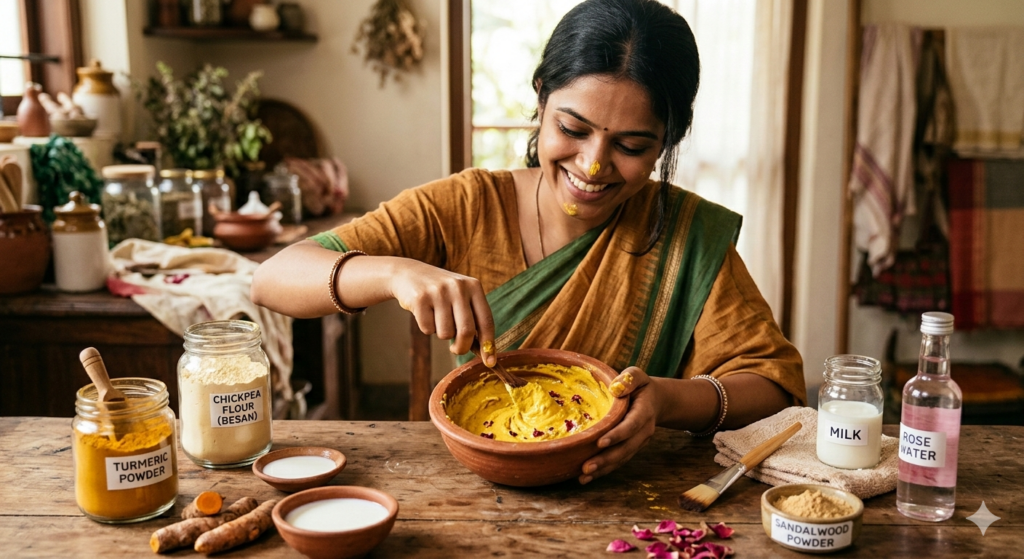
In many Indian households, bridal skincare begins days before the wedding with a ceremony centered around “ubtan” a paste made from gram flour, turmeric, milk or rosewater, and sometimes sandalwood.
This ritual is deeply connected to Ayurveda, which views skin health as a reflection of internal balance. Turmeric is considered warming, cleansing, and supportive for inflammatory skin conditions.
Traditionally, families prefer wild turmeric specifically Curcuma aromatica also known as Kasturi Manjal, because it is:
- More fragrant
- Milder on skin
- Less likely to cause intense staining
- Not typically used for cooking
This distinction matters. Culinary turmeric (Curcuma longa) can stain more strongly and may be harsher when applied in larger quantities.
Why Turmeric Works on Skin
Modern research has examined turmeric’s topical properties, particularly curcumin and other curcuminoids.
- Anti-inflammatory Effects
Curcumin has demonstrated anti-inflammatory activity in laboratory studies, which may help calm redness and irritation.
- Antimicrobial Properties
Turmeric exhibits antimicrobial activity against certain bacteria and fungi, which explains its traditional use for acne-prone skin.
- Antioxidant Activity
Oxidative stress contributes to premature skin aging. Curcumin’s antioxidant profile supports its use in brightening and revitalizing masks.
However, topical turmeric is not a medical treatment and results vary based on skin type and concentration.
DIY Turmeric Face Mask Recipes
- Classic Bridal Ubtan
Best for: Dull or uneven skin tone
Ingredients:
- 1 tablespoon gram flour (besan)
- A pinch (¼ teaspoon) wild turmeric powder
- Milk or rosewater to form paste
How to Use:
Apply evenly. Leave for 10–15 minutes. Gently scrub off while rinsing.
This exfoliates mildly while delivering turmeric’s soothing effect.
- Acne-Calming Mask
Best for: Oily or acne-prone skin
Ingredients:
- ½ teaspoon turmeric
- 1 tablespoon raw honey
- 1 tablespoon yogurt
Honey adds antibacterial support, while yogurt provides lactic acid for gentle exfoliation.
- Brightening Sandalwood Blend
Best for: Uneven pigmentation
Ingredients:
- ½ teaspoon turmeric
- 1 teaspoon sandalwood powder
- Rosewater
This combination is widely used in traditional beauty regimens for enhancing glow.
Which Turmeric Should You Use?
For skincare, wild turmeric (Curcuma aromatica) is generally preferred over culinary turmeric (Curcuma longa).
Avoid:
- Artificially colored turmeric
- Adulterated powders
- Highly processed commercial blends
If you cannot source wild turmeric, use culinary turmeric sparingly and expect temporary staining.
Precautions Before Applying
- Always perform a patch test
- Use small quantities
- Avoid leaving on for more than 15–20 minutes
- Expect mild yellow tint that fades within hours
- Do not apply on broken or highly sensitive skin
- Turmeric stains fabric easily wear old clothing during application.
Tradition Meets Modern Beauty
In a world dominated by synthetic skincare, turmeric represents something different: intergenerational knowledge.
It was never packaged in glass jars with minimalist branding. It lived in kitchen shelves, woven into ritual and routine.
Today, as natural beauty resurges globally, turmeric’s skincare legacy continues not as a miracle cure, but as a culturally rooted botanical ally.