As sustainability becomes central to food choices, consumers are increasingly evaluating not only nutrition, but also environmental impact. Plant-based diets are often promoted as climate-friendly but not all plant foods are equal.
Where does jackfruit stand in terms of sustainability? Is it truly an environmentally responsible alternative?
This guide explores the environmental footprint of jackfruit and how it compares within sustainable food systems.
Jackfruit as a Low-Input Tropical Crop
Jackfruit (Artocarpus heterophyllus) is a tropical tree species documented by Kew Gardens as native to South and Southeast Asia.
Unlike many commercial crops, jackfruit trees:
- Require relatively low agricultural inputs
- Thrive in warm, humid climates
- Can grow in marginal soils
- Produce large yields per tree
Once established, jackfruit trees are hardy and long-living, often bearing fruit for decades. This reduces the need for annual replanting, lowering land disturbance compared to seasonal crops.
High Yield, Low Waste
Jackfruit is considered one of the most productive fruit trees in the tropics. A single tree can produce dozens sometimes hundreds of fruits per year.
Because the fruit is large and dense, it offers high caloric and edible output per harvest cycle. Additionally:
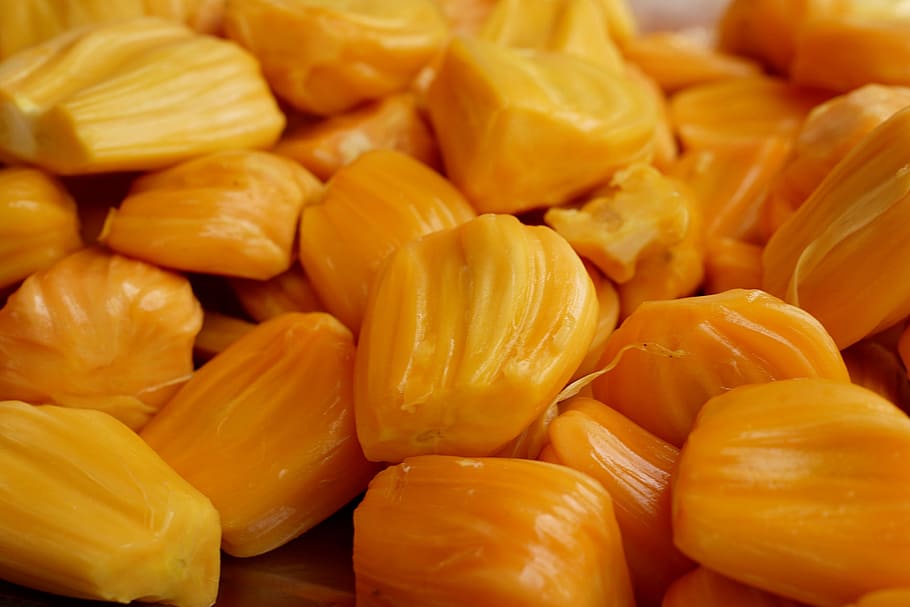
- The edible bulbs are consumed fresh or cooked
- The seeds are edible
- Even young jackfruit can be harvested for cooking
This multi-use nature reduces food waste and increases efficiency.
Carbon Footprint Considerations
Plant-based foods generally have lower greenhouse gas emissions compared to animal products. According to research supported by the Food and Agriculture Organization, livestock production contributes significantly to global agricultural emissions.
Jackfruit, being a tree crop, may offer additional environmental advantages:
- Trees absorb carbon dioxide during growth
- Perennial crops reduce soil disruption
- Lower fertilizer requirements compared to intensive monoculture crops
However, transportation impacts must also be considered. Exported jackfruit may carry higher emissions depending on shipping distance.
Locally sourced jackfruit typically has a smaller carbon footprint than imported varieties.
Water Usage and Resource Efficiency
Water efficiency is a major sustainability concern in agriculture.
Jackfruit trees are generally rain-fed in tropical regions and do not require heavy irrigation compared to some commercial crops. While exact water footprint varies by region, tree crops often use water more efficiently than many annual vegetables.
In contrast, animal protein production typically requires significantly more water per kilogram of edible product.
Biodiversity and Agroforestry Benefits
Jackfruit trees are commonly integrated into mixed farming systems and agroforestry models.
Agroforestry systems where trees are grown alongside crops can:
- Improve soil quality
- Support biodiversity
- Reduce erosion
- Provide shade for understory crops
These systems contribute to more resilient agricultural landscapes compared to large-scale monocultures.
Jackfruit as a Meat Alternative
One reason jackfruit has gained attention in sustainability discussions is its use as a meat substitute.
When unripe, jackfruit’s fibrous texture mimics shredded meat. Replacing animal protein with plant-based alternatives can reduce environmental pressure related to:
- Land use
- Water consumption
- Methane emissions
While jackfruit is not high in protein, its role as a texture-based substitute helps diversify plant-based eating patterns.
Sustainability Limitations to Consider
Despite its advantages, jackfruit is not automatically “zero impact.”
Factors that affect sustainability include:
- Long-distance shipping
- Packaging (especially canned and frozen varieties)
- Agricultural practices used in cultivation
Consumers seeking lower environmental impact should prioritize:
- Locally grown jackfruit
- Minimal processing
- Sustainable packaging
Sustainable Diet Patterns
Environmental sustainability is influenced by overall dietary patterns rather than single ingredients.
Jackfruit can be part of a climate-conscious diet when:
- It replaces higher-impact animal products
- It is sourced responsibly
- It is consumed as part of a balanced plant-forward diet
The shift toward diversified plant foods aligns with broader global recommendations for sustainable food systems.
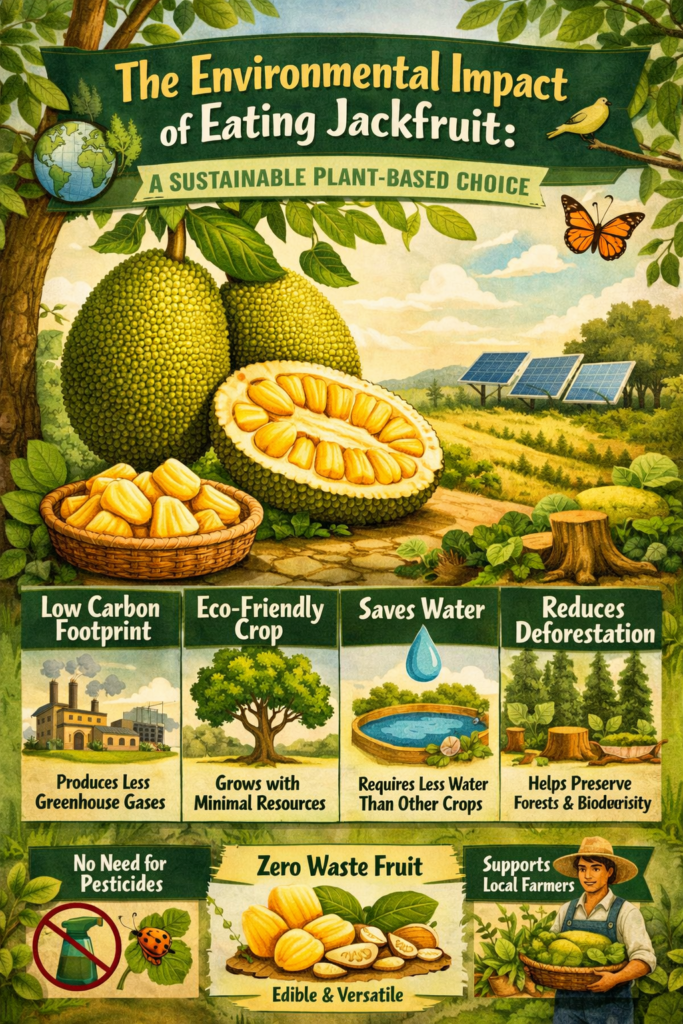
Jackfruit offers several sustainability advantages as a perennial, high-yield tropical tree crop. It requires relatively low inputs, supports agroforestry systems, and provides a plant-based alternative to meat textures.
However, environmental impact depends on sourcing, transportation, and production methods.
For environmentally conscious consumers, jackfruit represents a promising though not perfect addition to a sustainable diet.