Jackfruit is one of the oldest cultivated fruits in the world. Long before it became popular in vegan recipes and plant-based diets, jackfruit was a staple food in tropical regions for thousands of years.
In this article, we explore where jackfruit originated, how it spread across continents, and why it remains culturally important today.
Where Did Jackfruit Originate?
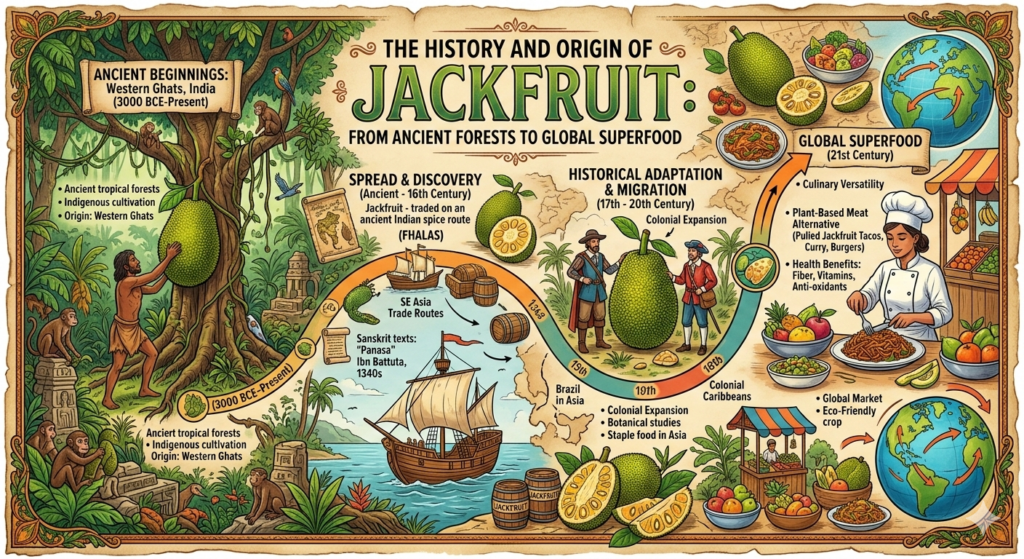
Jackfruit (Artocarpus heterophyllus) is believed to have originated in the rainforests of the Western Ghats in India.
Historical and botanical evidence suggests:
- It was cultivated in India over 3,000–6,000 years ago.
- It thrived in tropical, humid climates.
- It became an important staple due to its large size and high yield.
From India, jackfruit gradually spread across South and Southeast Asia through trade routes and migration.
Early Cultivation in South Asia
In ancient times, jackfruit was valued because:
- One fruit could feed an entire family.
- The tree required relatively low maintenance.
- It produced fruit seasonally in abundance.
It became widely cultivated in:
- Bangladesh
- Sri Lanka
- Southern regions of India
In Bangladesh, jackfruit is so culturally significant that it is recognized as the national fruit.
Spread to Southeast Asia
Through maritime trade and cultural exchange, jackfruit reached:
- Thailand
- Malaysia
- Indonesia
- Philippines
Each region developed unique ways of preparing jackfruit:
- Thailand uses ripe jackfruit in sweets and desserts.
- Indonesia incorporates young jackfruit in traditional savory dishes.
- Sri Lanka cooks unripe jackfruit as a staple curry.
The adaptability of jackfruit helped it become deeply embedded in regional cuisines.
Introduction to Other Continents
During the Age of Exploration and colonial trade, jackfruit was transported to other tropical regions.
It was introduced to:
- Parts of East Africa
- The Caribbean islands
- Brazil
Because jackfruit thrives in tropical climates, it adapted well in these regions and became part of local agriculture.
Cultural and Religious Significance
Jackfruit holds cultural importance in many communities.
In parts of India:
- It is associated with seasonal festivals.
- The wood of the jackfruit tree is used for furniture and musical instruments.
- Leaves are sometimes used in traditional cooking methods.
In rural areas, jackfruit trees are often planted in home gardens as a symbol of food security and abundance.
Jackfruit in Traditional Medicine
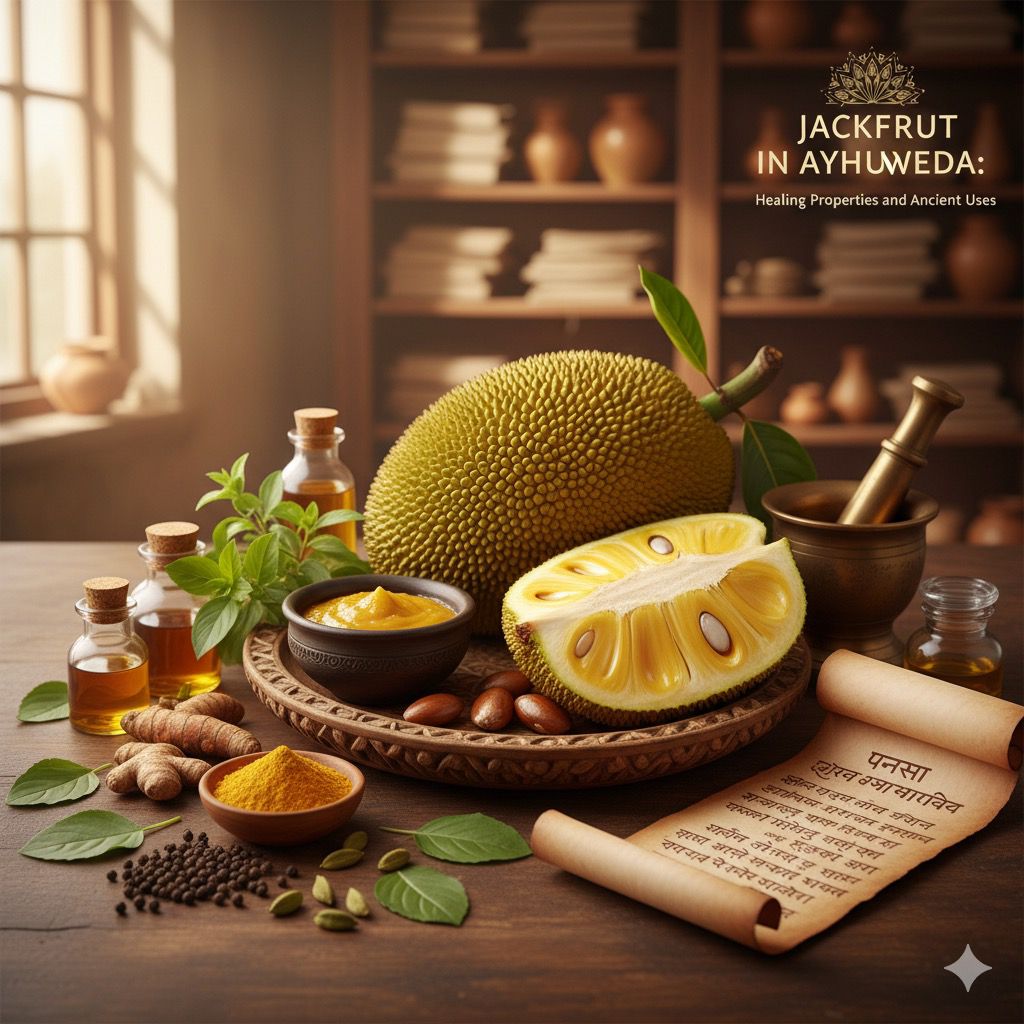
In traditional Ayurvedic practices originating in India, jackfruit and its various parts (fruit, seeds, leaves) have been used in natural remedies.
Communities historically used jackfruit for:
- Supporting digestion
- Boosting immunity
- General nourishment
While modern science continues to study these claims, jackfruit has long been considered a wholesome and strengthening food.
The Modern Global Rise of Jackfruit
Although jackfruit has been consumed for thousands of years, it gained major global attention in the 21st century due to the rise of plant-based diets.
Unripe jackfruit became popular as a meat substitute because of its:
- Shredded texture
- Ability to absorb flavours
- Natural plant origin
Today, canned and packaged jackfruit products are widely available in Western markets, especially among vegan and vegetarian communities.
Why Jackfruit Survived for Thousands of Years
Several factors contributed to jackfruit’s long history:
- High food yield from a single fruit
- Drought resistance once established
- Minimal processing needed
- Versatility (sweet and savory uses)
Few fruits offer the same combination of size, nutrition, and adaptability.
From the ancient forests of India to global supermarket shelves, jackfruit has traveled a remarkable journey.
Its deep roots in South Asian agriculture, expansion across Southeast Asia, and modern reinvention as a plant-based ingredient show how traditional foods can evolve with time.
Understanding the history of jackfruit not only gives us cultural insight but also highlights why it remains one of the most important tropical fruits in the world today.