Jackfruit is a tropical fruit prized across the world for its size, flavour, and versatility. But did you know that ripe and unripe jackfruit are very different not just in taste, but also in texture, nutrition, and how they are used in cooking?
This article breaks down the key differences between ripe and unripe jackfruit to help your readers choose the best version for their needs.
What Is Ripe Jackfruit?
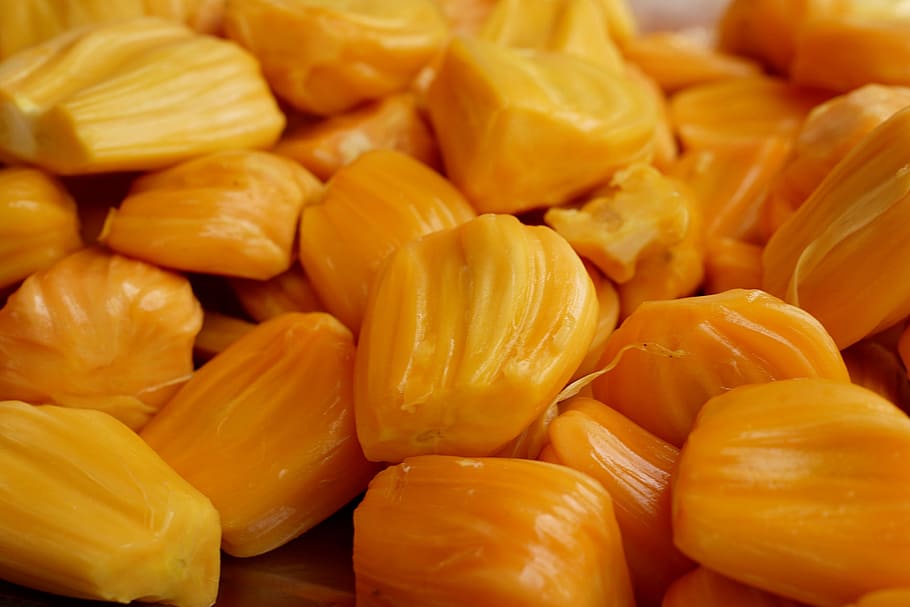
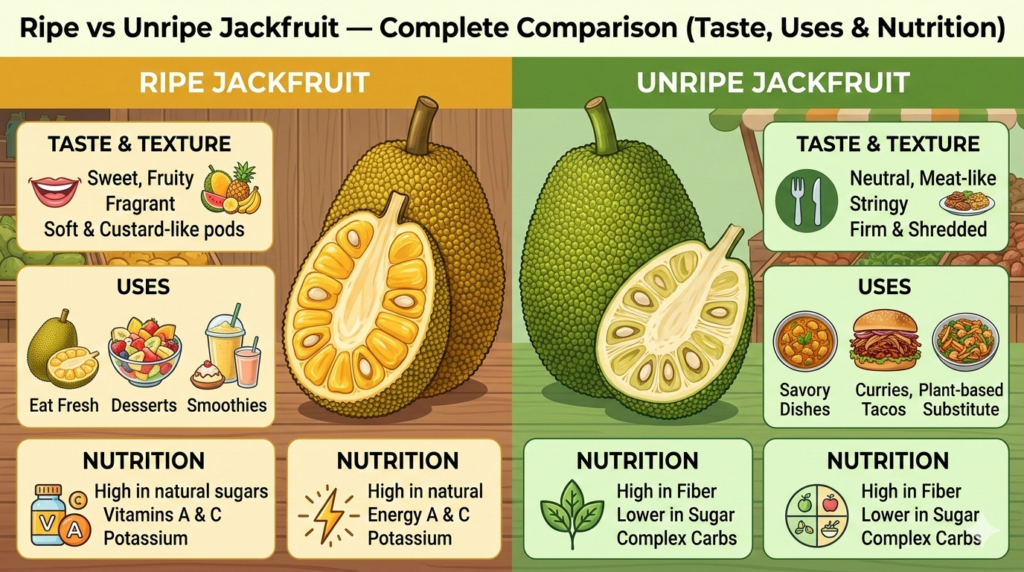
Ripe jackfruit is fully mature and ready to eat. Its edible yellow bulbs are naturally sweet and juicy, with a fruity aroma similar to a mix of mango and pineapple.
Common Uses:
- Fresh fruit
- Smoothies
- Desserts
- Fruit salads
- Sweet snacks
Ripe jackfruit is enjoyed for its natural sweetness and bright flavor.
What Is Unripe Jackfruit?
Unripe jackfruit is harvested before it fully ripens. It has a firm texture, mild flavor, and much lower sugar content.
Common Uses:
- Savory curries
- Vegan meat substitutes
- Stir-fries
- Stews
- BBQ pulled “meat”
Unripe jackfruit is especially loved in plant-based and vegetarian cooking because its texture mimics shredded meat when cooked.
Key Differences: Ripe vs Unripe Jackfruit
Texture
- Ripe: Soft, juicy, tender bulbs
- Unripe: Firm, slightly fibrous, meat-like
Because of its soft texture, ripe jackfruit is easy to chew and perfect for desserts.
Unripe jackfruit holds its shape during cooking, making it suitable for savory dishes and meat substitutes.
Taste
- Ripe: Sweet, fruity, aromatic
- Unripe: Mild, neutral, slightly earthy
Ripe jackfruit tastes like a mixture of tropical fruits, while unripe jackfruit is almost flavour-neutral, absorbing spices and sauces well.
Sugar Content
- Ripe jackfruit contains higher levels of natural sugars, which gives it a sweet taste.
- Unripe jackfruit has significantly less sugar because it hasn’t fully developed its sugars yet.
This makes unripe jackfruit a better choice for savory cooking and for people who want lower sugar intake.
Nutrition Differences
- Ripe: Higher natural sugars and calories
- Unripe: Lower sugar, more resistant starch
Unripe jackfruit has more resistant starch, a type of carbohydrate that behaves more like fiber in the body and may support better digestion and blood sugar control.
Culinary Uses
Ripe Jackfruit Uses
- Eaten fresh
- In smoothies
- With yogurt
- In desserts
- Fruit salads
Unripe Jackfruit Uses
- Curries
- Tacos
- Sandwiches
- BBQ pulled jackfruit
- Stir-fries
The mild flavour of unripe jackfruit makes it versatile in savory cuisines, while the sweetness of ripe jackfruit makes it perfect for sweet dishes.
How to Tell When Jackfruit Is Ripe vs Unripe
Ripe Jackfruit:
- Yellowish colour under the skin
- Sweet aroma
- Slightly softer when pressed
- Hollow sound when tapped
Unripe Jackfruit:
- Green skin
- Firmer texture
- Mild or no smell
- Hard when pressed
When to Use Each Type
Use ripe jackfruit when you want:
- Sweet snacks
- Fruit based dishes
- Natural desserts
Use unripe jackfruit when you want:
- Savory meals
- Plant-based meat substitutes
- Low sugar recipes
Storage Tips
Ripe Jackfruit
- Store in the refrigerator after cutting
- Keeps fresh for up to 5 days
- Freeze in airtight bags for longer storage
Unripe Jackfruit
- Store whole at room temperature until ready to use
- Once cut, refrigerate and use within a few days
Ripe and unripe jackfruit are both delicious but their uses, flavours, and nutritional profiles are very different.
- Ripe jackfruit is sweet, aromatic, and best for fresh eating or desserts.
- Unripe jackfruit is firm, mild, and perfect for savory dishes and plant-based recipes.
Understanding these differences helps you choose the right version for any recipe or dietary goal.