Cashew processing plays a critical role in determining the quality, commercial value, and export readiness of one of the world’s most traded nuts. While the cashew tree yields a high-value crop, the raw cashew nut itself cannot be consumed without processing. It contains a hard shell filled with cashew nut shell liquid (CNSL), which is corrosive and must be handled carefully.
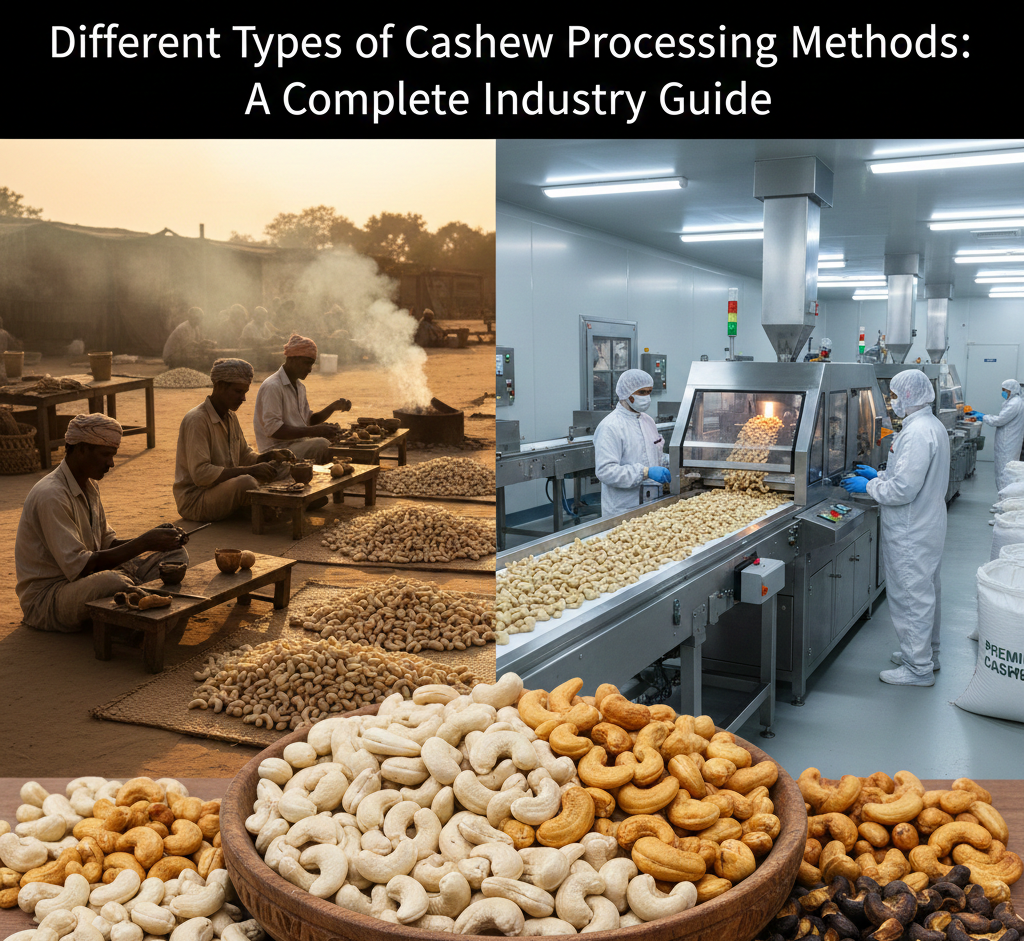
Over the years, the cashew industry has evolved from labour-intensive, traditional practices to highly automated, export-oriented processing systems. Understanding the different types of cashew processing methods is essential for processors, investors, traders, and agri-entrepreneurs looking to balance cost efficiency, product quality, compliance, and sustainability.
This guide explores the major cashew processing methods used across the industry today and explains how each method impacts yield, safety, and market suitability.
Why Cashew Processing Method Matters
The choice of processing method directly influences:
- Kernel quality and appearance
- Percentage of whole kernels versus breakage
- Worker safety and labour dependence
- Environmental impact and waste management
- Compliance with food safety and export standards
Different markets demand different grades and processing standards, making method selection a strategic business decision rather than a purely operational one.
Traditional Cashew Processing Methods
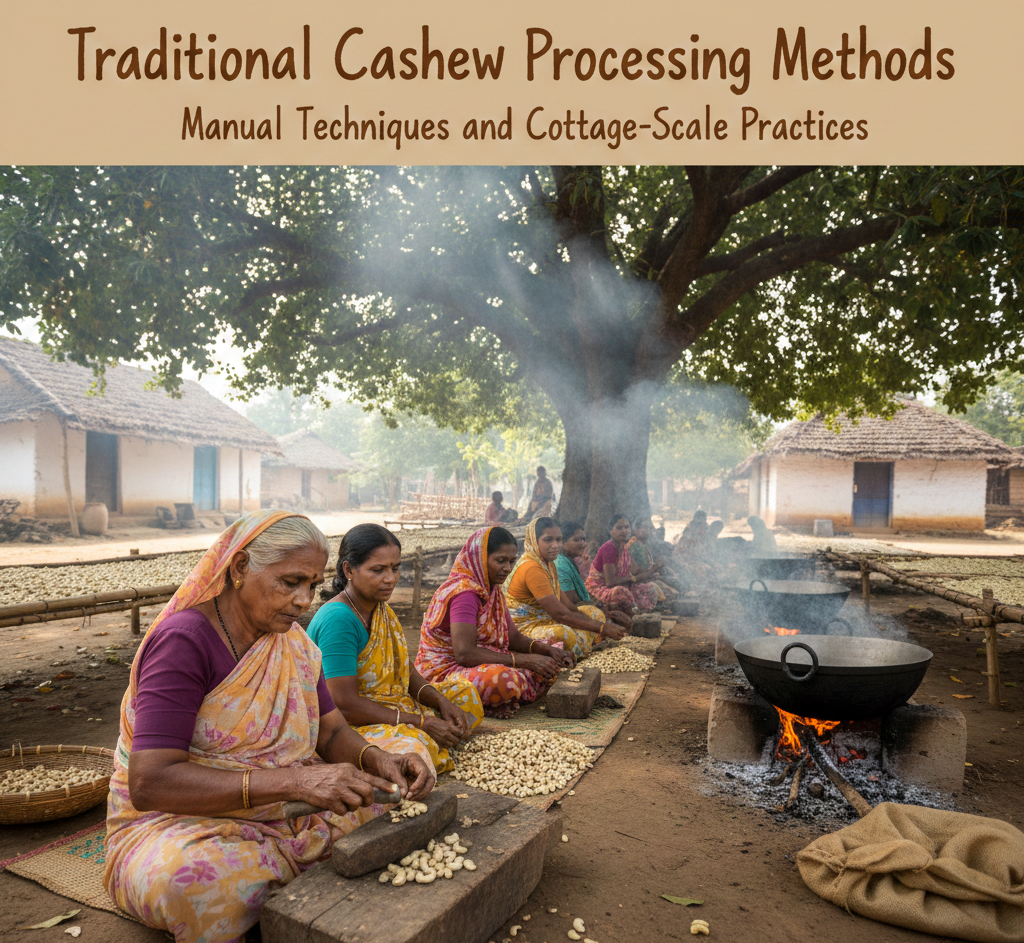
Traditional cashew processing remains prevalent in cottage industries and small-scale units, particularly in regions with abundant manual labour.
This method typically involves:
- Sun drying of raw cashew nuts
- Open-pan or firewood roasting
- Manual shelling using hand tools
- Hand peeling and grading
While traditional processing requires minimal capital investment, it is highly labour-intensive and carries higher risks of kernel breakage and worker exposure to CNSL. Quality consistency is difficult to maintain, making this method less suitable for large-scale export operations but still relevant for local markets and small processors.
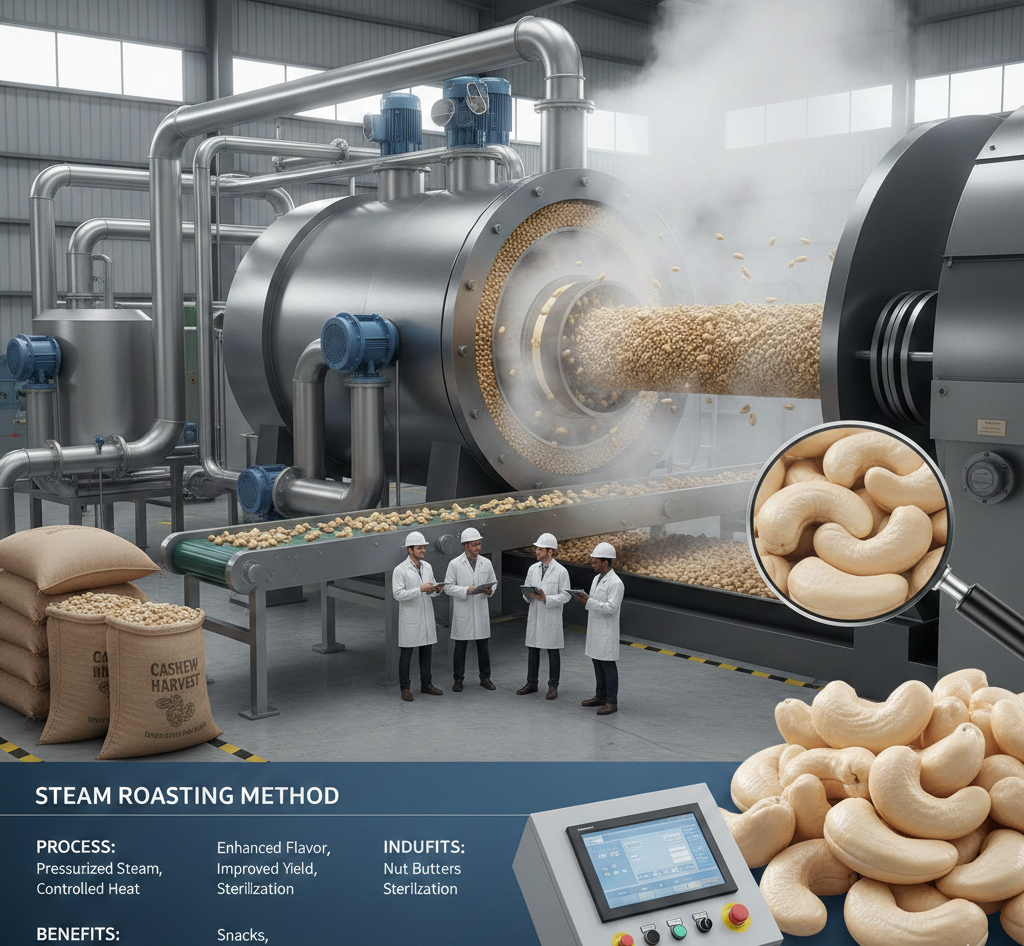
Steam Roasting Method in Cashew Processing
Steam roasting is one of the most widely adopted modern cashew processing methods, particularly in export-oriented facilities.
In this method:
- Raw cashew nuts are steamed under controlled pressure
- Heat treatment loosens the shell, reducing CNSL hazards
- Shelling becomes easier with lower kernel damage
Steam processing offers superior kernel colour, reduced breakage, and improved safety compared to traditional roasting. It also allows better control over moisture content, which is critical for grading and long-term storage. As a result, this method is preferred for producing premium grades intended for international markets.
Drum Roasting Method of Cashew Processing
Drum roasting involves rotating raw cashew nuts inside a heated metal drum, often fueled by firewood or other combustible materials.
Key characteristics include:
- High-temperature roasting
- Partial recovery of CNSL
- Faster processing than open roasting
Although drum roasting improves efficiency compared to traditional methods, it still poses challenges in temperature control and uniform roasting. Kernel quality may vary, and the method is gradually being replaced by steam-based systems in modern plants. However, it remains in use where fuel costs are low and infrastructure investment is limited.
Oil Bath Method of Cashew Processing
The oil bath method uses cashew nut shell liquid itself as a heating medium for roasting raw nuts.
This method is known for:
- High shelling efficiency
- Improved CNSL recovery
- Faster throughput
At the same time, it raises significant concerns related to worker safety, environmental impact, and regulatory compliance. Many regions are moving away from oil bath processing due to stricter occupational health standards and sustainability expectations. Its use today is largely limited to specific industrial contexts with robust safety controls.
Mechanical Cashew Shelling Technology
Mechanical shelling bridges the gap between manual labour and full automation.
This approach typically includes:
- Semi-automatic shelling machines
- Reduced dependence on manual shelling
- Higher and more consistent output
Mechanical shellers improve productivity and reduce physical strain on workers while maintaining acceptable kernel recovery rates. They are particularly suited for medium-scale processors looking to modernise operations without the capital burden of full automation.
Fully Automated Cashew Processing Plants
Fully automated processing plants represent the most advanced stage of cashew processing technology.
These facilities integrate:
- Automated roasting and shelling
- Controlled drying and peeling systems
- Electronic grading and packing
Automation ensures uniform quality, high food safety standards, and scalability. While capital-intensive, automated plants significantly reduce long-term labour costs and are best suited for export-focused businesses operating in competitive global markets.
Sustainable and Modern Cashew Processing Practices
Sustainability has become a defining factor in modern cashew processing.
Emerging practices focus on:
- Energy-efficient steam systems
- CNSL recovery and reuse
- Waste reduction and by-product utilisation
- Compliance with ESG and environmental norms
Sustainable processing not only lowers environmental impact but also enhances brand value and access to premium international buyers increasingly focused on responsible sourcing.
Choosing the Right Cashew Processing Method
There is no one-size-fits-all approach to cashew processing. The ideal method depends on:
- Scale of operation
- Target market (domestic vs export)
- Capital availability
- Regulatory environment
- Long-term growth strategy
Many processors adopt hybrid systems, gradually upgrading from traditional or mechanical methods to steam-based or automated processing as demand and capacity increase.
As global demand for cashews continues to rise, processing methods will play a decisive role in determining competitiveness, profitability, and sustainability. Technological adoption, worker safety, and environmental responsibility are no longer optional they are central to the future of the cashew processing industry.
This pillar article serves as a foundation for understanding the different cashew processing methods, with each method explored in detail through dedicated cluster articles.